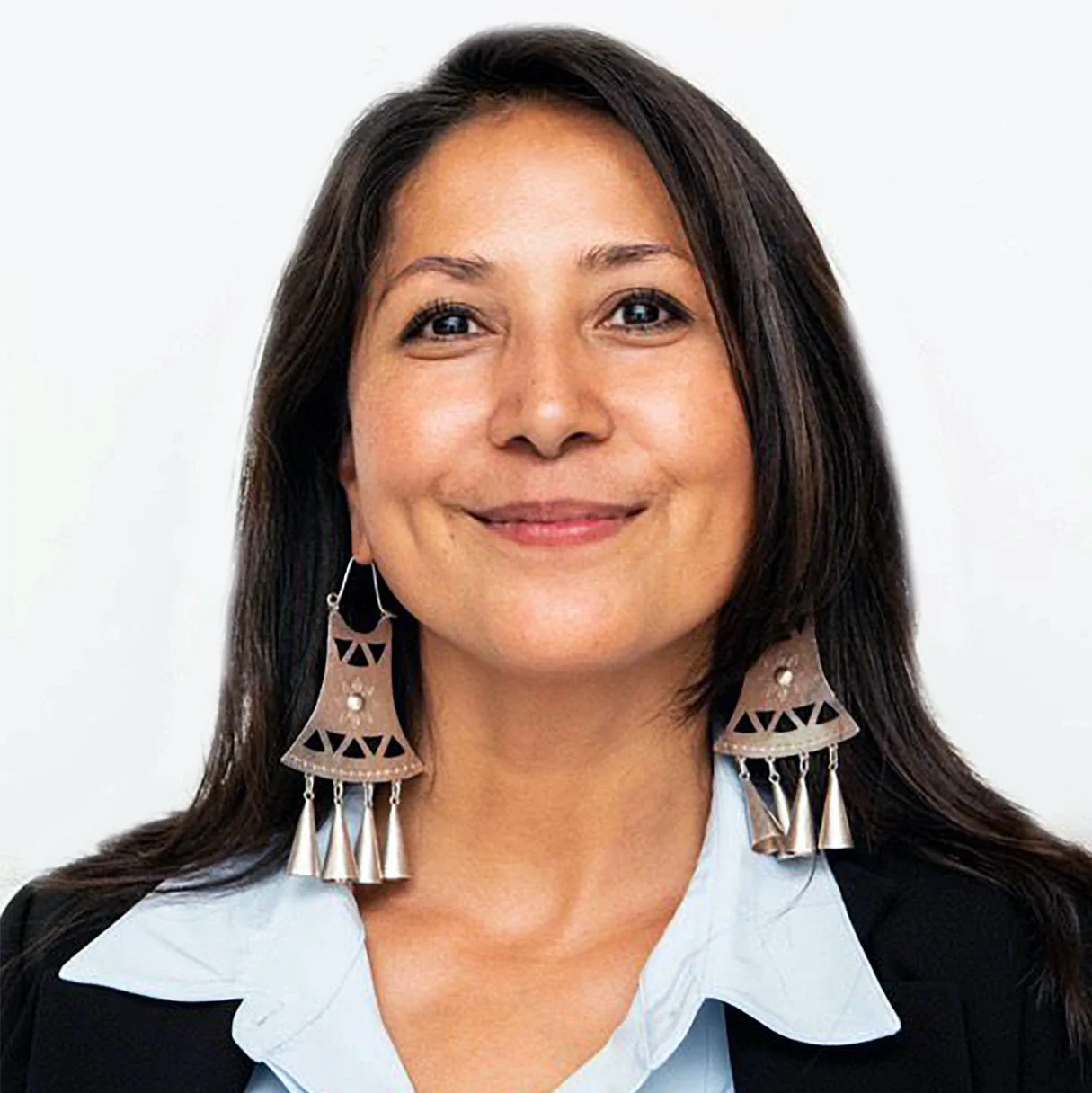
IFI in Panamá at the First meeting of the Subsidiary Body on Article 8(j) of the CBD relating to Indigenous Peoples and local communities (SB8J-1) / Oct. 2025
Panama City, Panamá | 27–30 October 2025
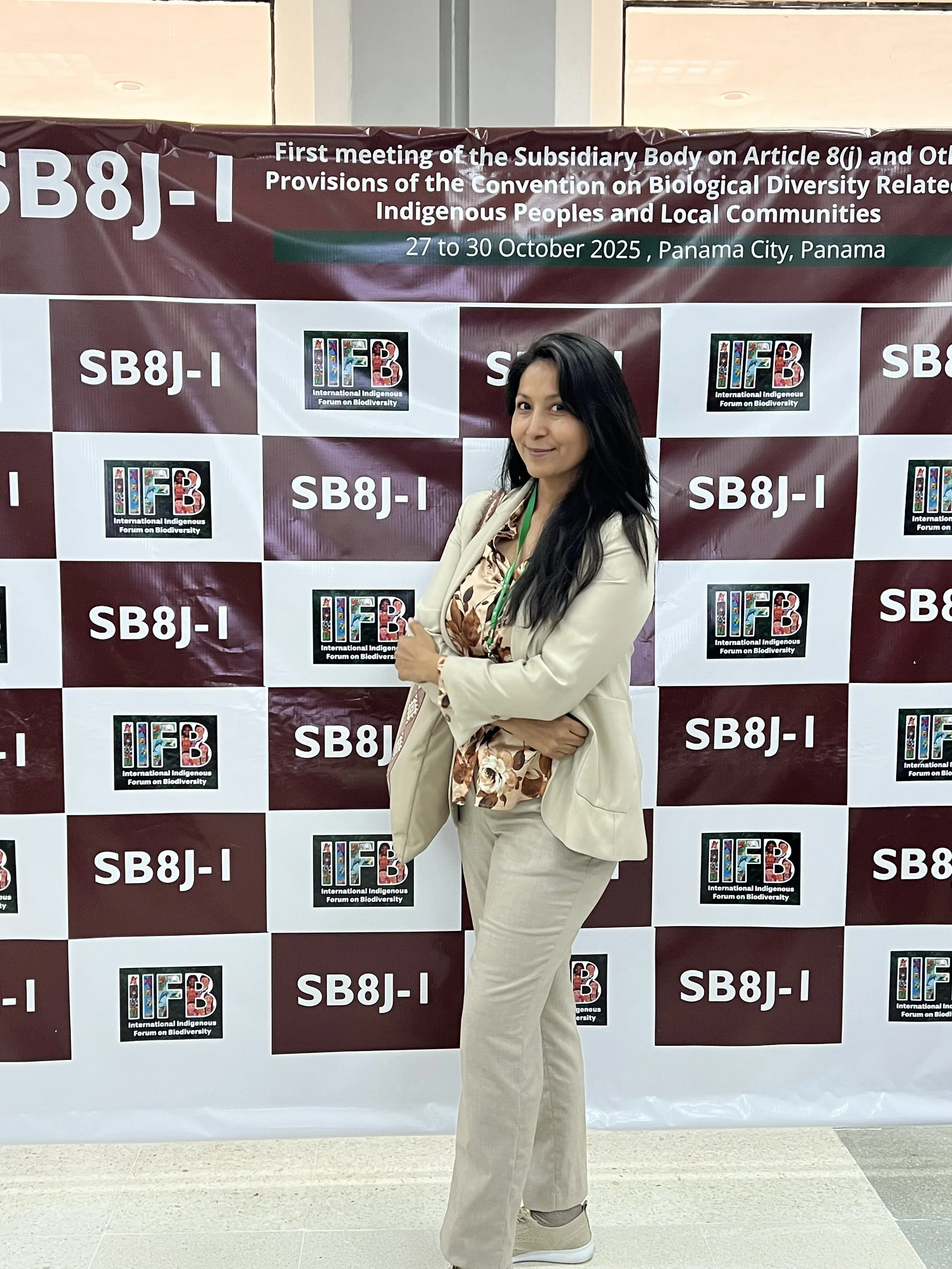
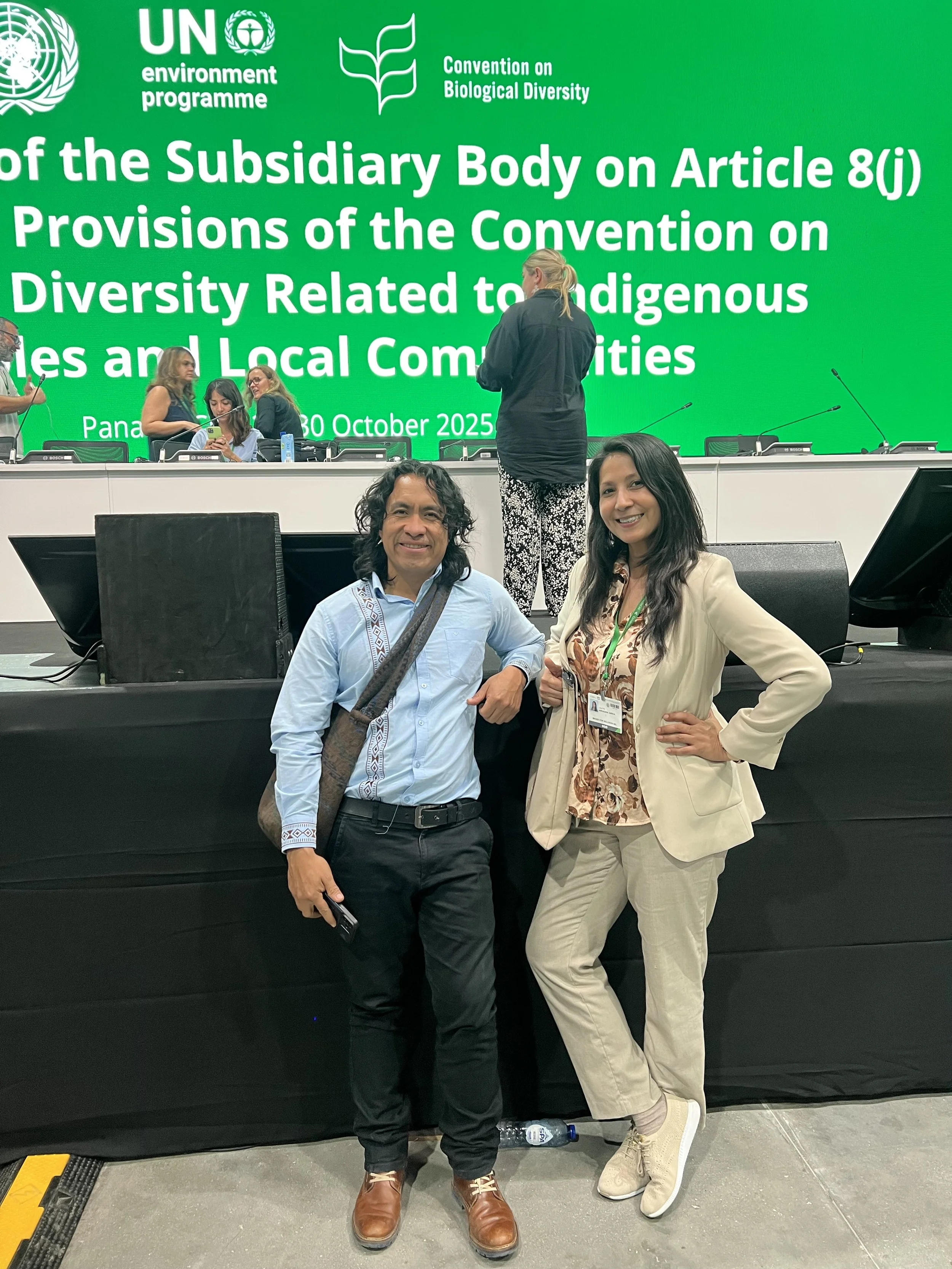
IFI President and CEO Lidia Arriagada Garcia at First Meeting of the Subsidiary Body on Article 8(j) and Other Provisions of CBD, Panamá.
Images for Inclusion Inc (IFI), an NGO in Consultative Status with the United Nations Economic and Social Council (ECOSOC), participated in the historic First Meeting of the Subsidiary Body on Article 8(j) and Other Provisions of the Convention on Biological Diversity Related to Indigenous Peoples and Local Communities (SB8J-1), held from 27 to 30 October 2025 in Panama City, Panamá.
IFI was represented by its President and CEO, Lidia Arriagada Garcia, who participated as head of the organization in the IIFB Indigenous Peoples’ Caucus and preparatory discussions, as well as caucus meetings held during SB8J-1. Throughout the four-day meeting, she attended plenary proceedings, engaged with Indigenous representatives and other participants, and closely followed the substantive negotiations.
For IFI, this was a particularly meaningful moment. One year earlier, at COP16 in Cali, Colombia, our delegate had participated daily in the Indigenous Peoples’ Caucus and followed the Article 8(j) negotiations into the late hours, while IFI supported dialogue with State delegations during the difficult negotiations that ultimately resulted in the establishment of the new permanent Subsidiary Body.
One year later, IFI was in Panamá for its historic first meeting.
From COP16 in Cali to the First SB8J in Panamá
The establishment of the permanent Subsidiary Body on Article 8(j) marked a historic milestone for Indigenous Peoples within the framework of the Convention on Biological Diversity (CBD), consolidating more than two decades of political advocacy and sustained negotiations led by the International Indigenous Forum on Biodiversity (IIFB).
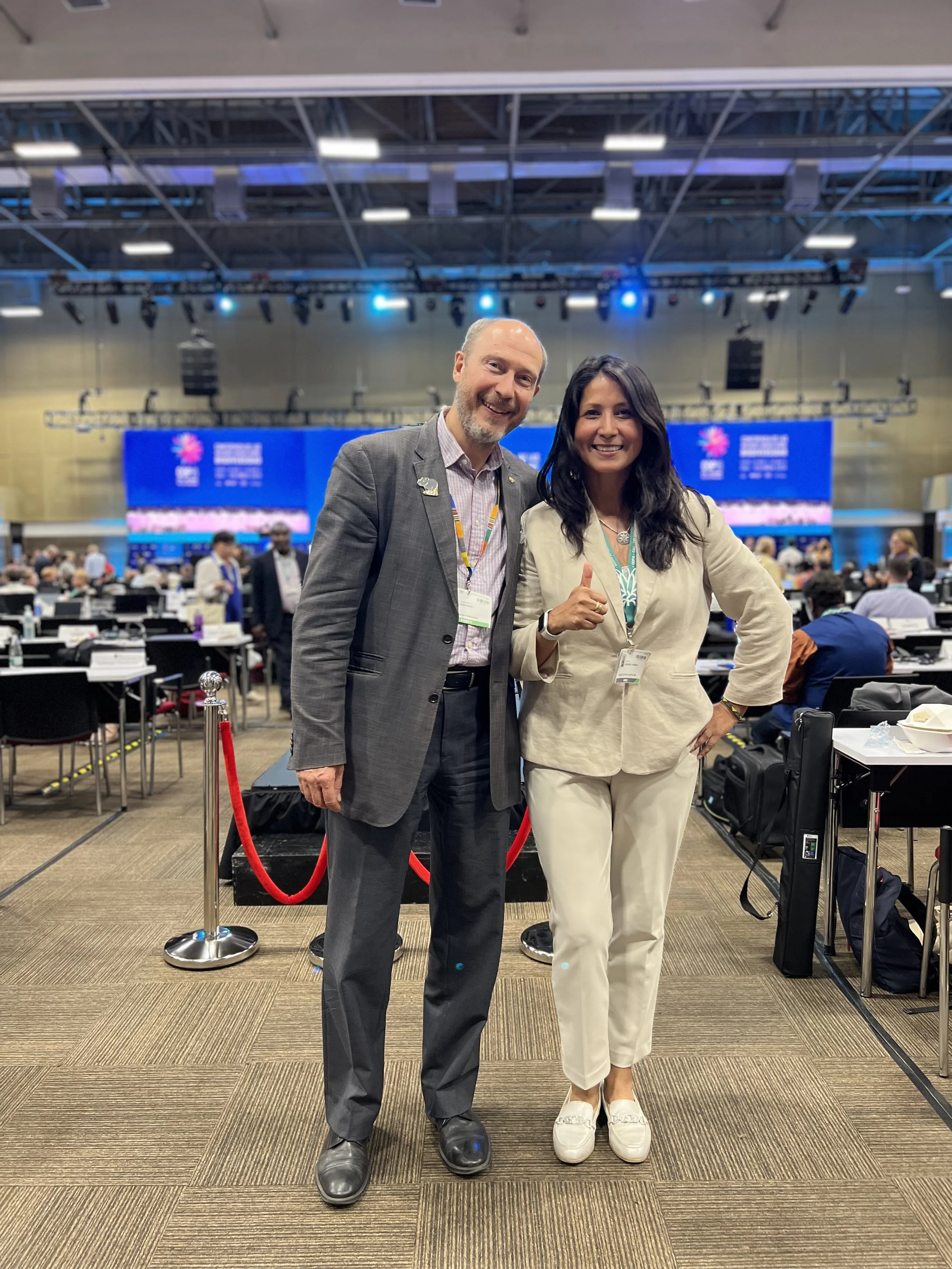
IFI President with Alexander Shestakov, expert representative of the Russian Federation, and former CBD member, during the final plenary of the COP16.
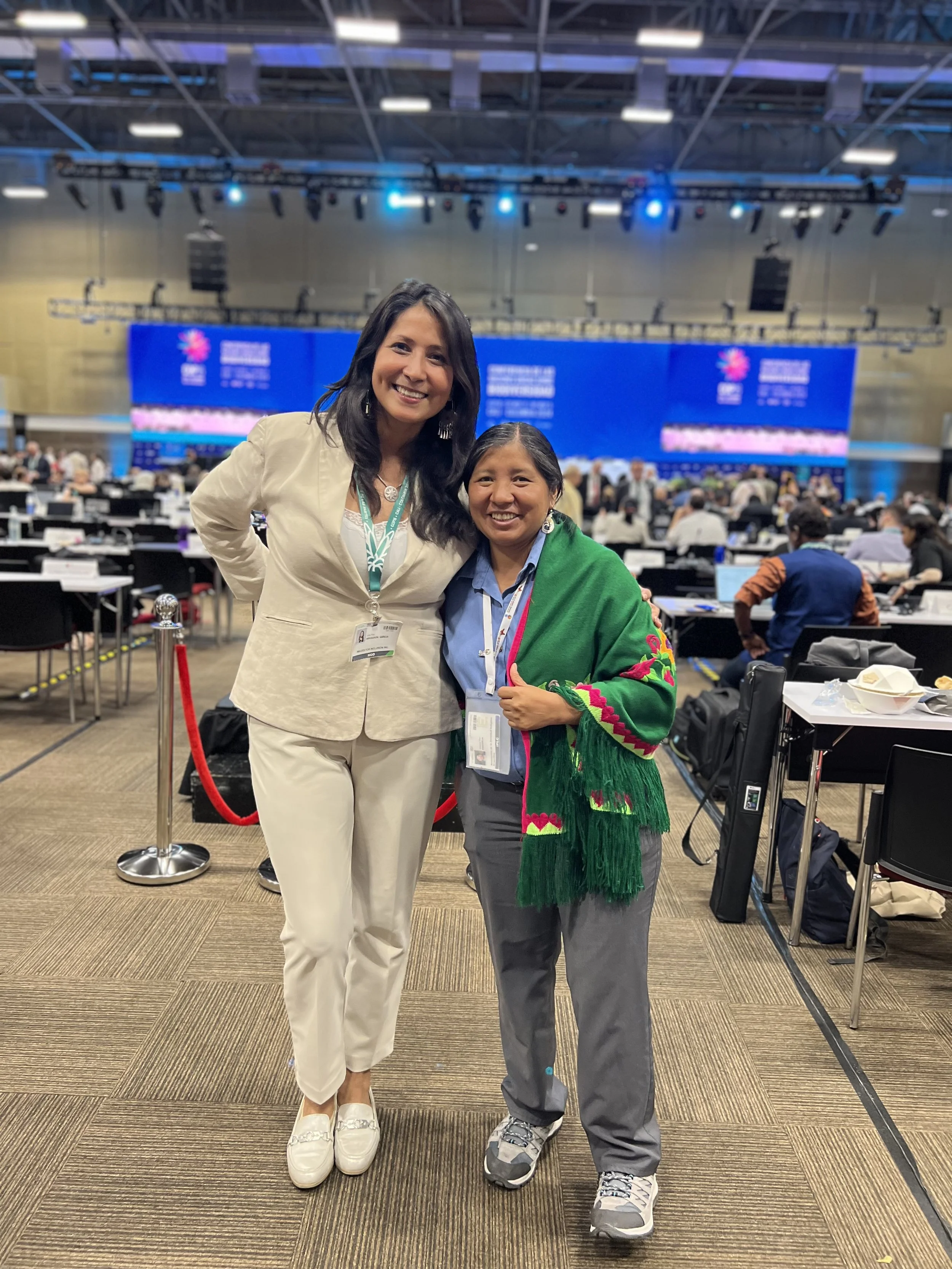
IFI President with Viviana Figueroa, Global Technical Coordinator of the International Indigenous Forum on Biodiversity (IIFB), Argentina — Omaguaca, during the final plenary of the COP16 in Cali, Colombia.
In this crucial setting, IFI had the privilege of participating in the decisive phase of COP16 in Cali. During an exhaustive negotiation marathon, our President and CEO —leveraging her technical bilingualism in English and Spanish— facilitated direct communication channels between the representatives of various Indigenous Peoples and the Brazilian delegation. Furthermore, under the strategic coordination of the IIFB, she conducted direct diplomatic efforts with the Chilean delegation. The representatives of the Chilean State explained that CONADI (National Corporation of Indigenous Development) had not provided the required technical inputs, and consequently, they adopted a neutral stance—neither supporting nor opposing the proposal—in strict representation of State interests.
Toward the final stage of the deliberations, the situation became critical due to the imminent risk of a definitive block from the delegations with the strongest reservations: India, Indonesia, the Democratic Republic of the Congo, and the Russian Federation. Faced with this extreme urgency and as a last available recourse, the IIFB leadership explicitly requested the Caucus to engage in direct dialogue with the States. In response to this call, a decisive encounter took place during a brief break to get something to eat, as plenary sessions regularly continued past midnight. In the cafeteria (Blue Zone of the Valle del Pacífico Event Center), while waiting in line to buy a taco, the President of IFI diplomatically approached Alexander Shestakov, representative of the Russian Federation and former Director of the Science, Society and Sustainable Futures Division of the CBD Secretariat (2018–2021), who was also waiting in line. In response to Shestakov’s objections that the body would not be operational and would later generate complaints, Arriagada Garcia responded firmly: “It is about time for Indigenous Peoples to decide for themselves.” At the end of the conversation, Shestakov replied, invoking an expression from his culture, that “sometimes, dreams come true.””
These intense discussions unfolded alongside a grueling institutional schedule, with plenary sessions regularly continuing until 1:00 or 2:00 AM. During the historic final plenary, which began on Friday, November 1, and only minutes before agreement was reached, the representative of the Russian Federation approached Lidia Arriagada-García and told her: “Your dream has become a reality.” In the early hours of November 2, 2024, the permanent Subsidiary Body on Article 8(j) was finally adopted. The decision was met with an emotional celebration across the plenary, with tears of joy after more than two decades of Indigenous Peoples’ struggle to reach that historic moment.
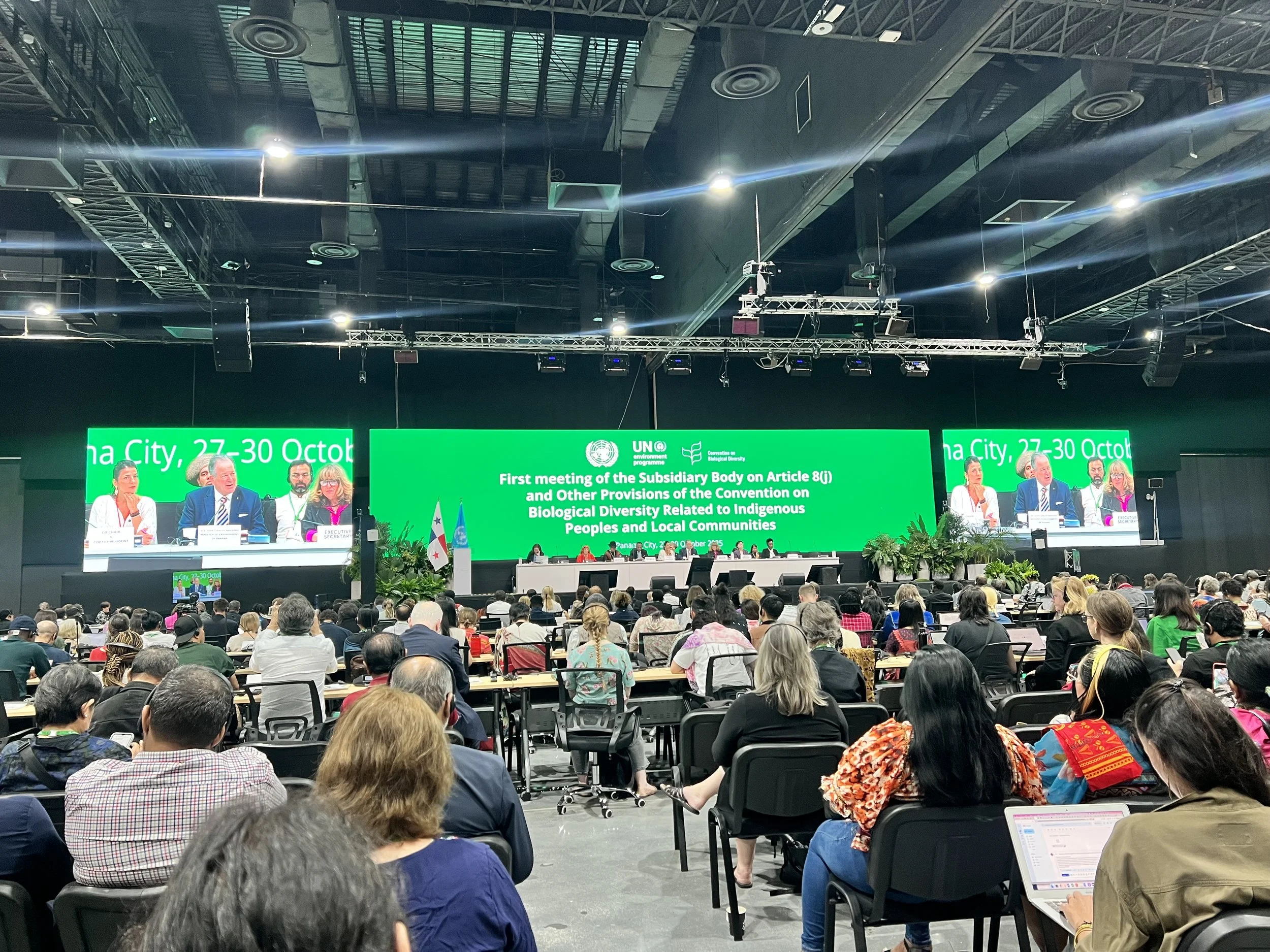
Plenary at the First Meeting of the Subsidiary Body on Article 8(j) and Other Provisions of CBD, held from 27 to 30 October 2025 in Panama City, Panamá.
The gathering in Panamá in October 2025 therefore represented the next chapter: the first time the newly established permanent body convened to begin its substantive work.
A Historic First Meeting
SB8J-1 brought Indigenous Peoples, local communities, Parties and organizations together around issues directly connected to biodiversity, territories, traditional knowledge, governance, rights and participation.
Among the major subjects before the meeting were the modus operandi of the new Subsidiary Body; Indigenous and Traditional Territories (ITTs); traditional knowledge; implementation of the Programme of Work on Article 8(j) to 2030; resource mobilization; and recommendations of the United Nations Permanent Forum on Indigenous Issues.
The historic significance of the gathering was reflected by Lucy Mulenkei, Co-Chair of the International Indigenous Forum on Biodiversity (IIFB), who described the convening of the new Subsidiary Body as an opportunity “to witness a long-held dream come true.”
But Panamá also demonstrated that creating the institution was only the beginning. The next challenge was translating recognition into concrete international language and implementation.
IFI Participates in the Indigenous Peoples’ Caucus and SB8J-1
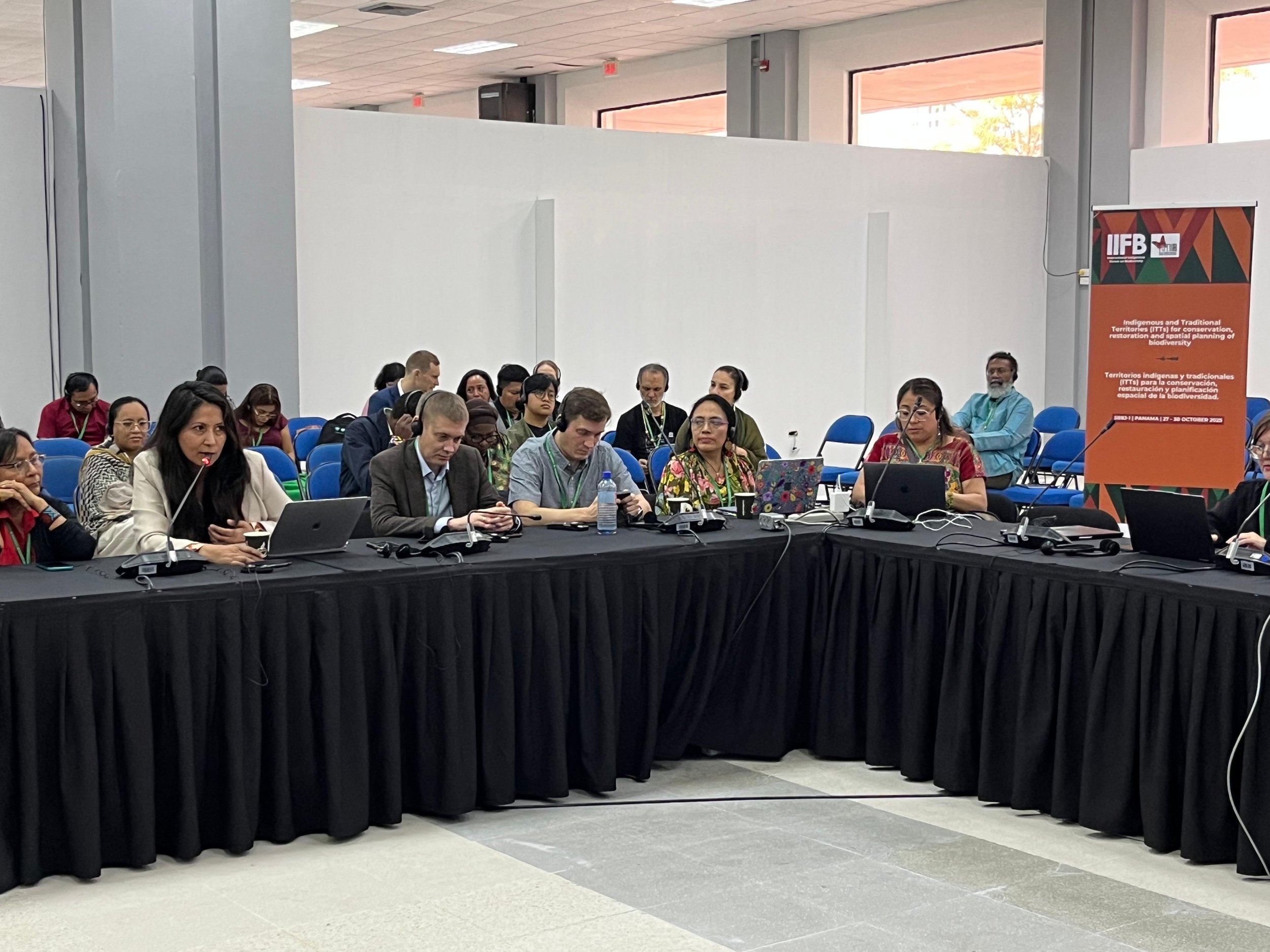
IFI President and CEO Lidia Arriagada Garcia speaking during the Indigenous Peoples’ Caucus at SB8J-1 in Panamá.
IFI President and CEO Lidia Arriagada Garcia participated in the IIFB Indigenous Peoples’ Caucus and preparatory discussions, continued participating in caucus meetings during SB8J-1, attended side events held alongside the official programme, and participated in the formal plenary proceedings throughout the four-day meeting.
These spaces provided an important opportunity to listen to Indigenous priorities, contribute to discussions and exchanges, and follow the collective work surrounding the formal negotiations.
Arriagada Garcia also attended the formal plenary proceedings throughout the four-day SB8J-1 meeting, following the positions advanced by Parties and Indigenous representatives and the development of the negotiating texts.
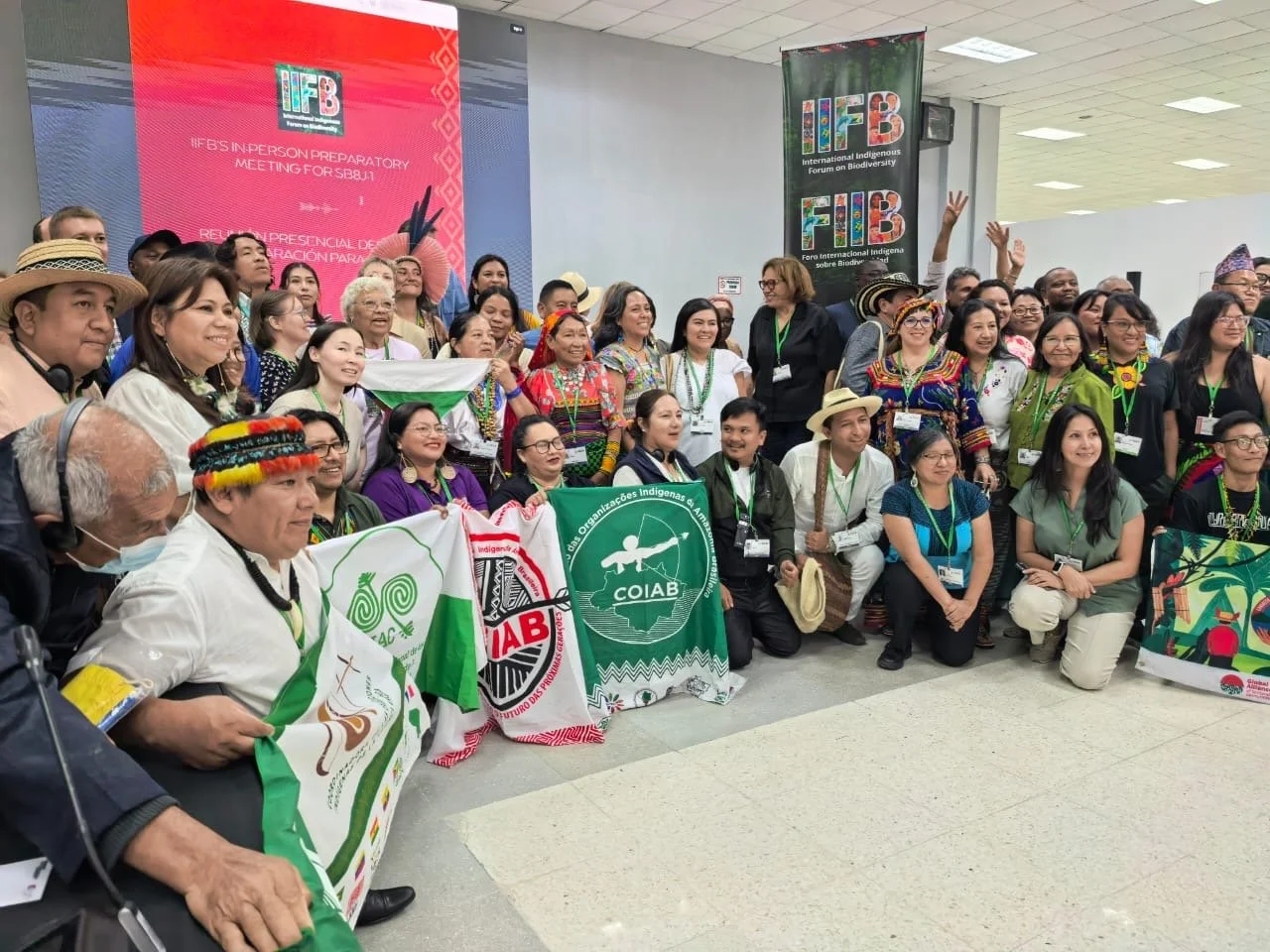
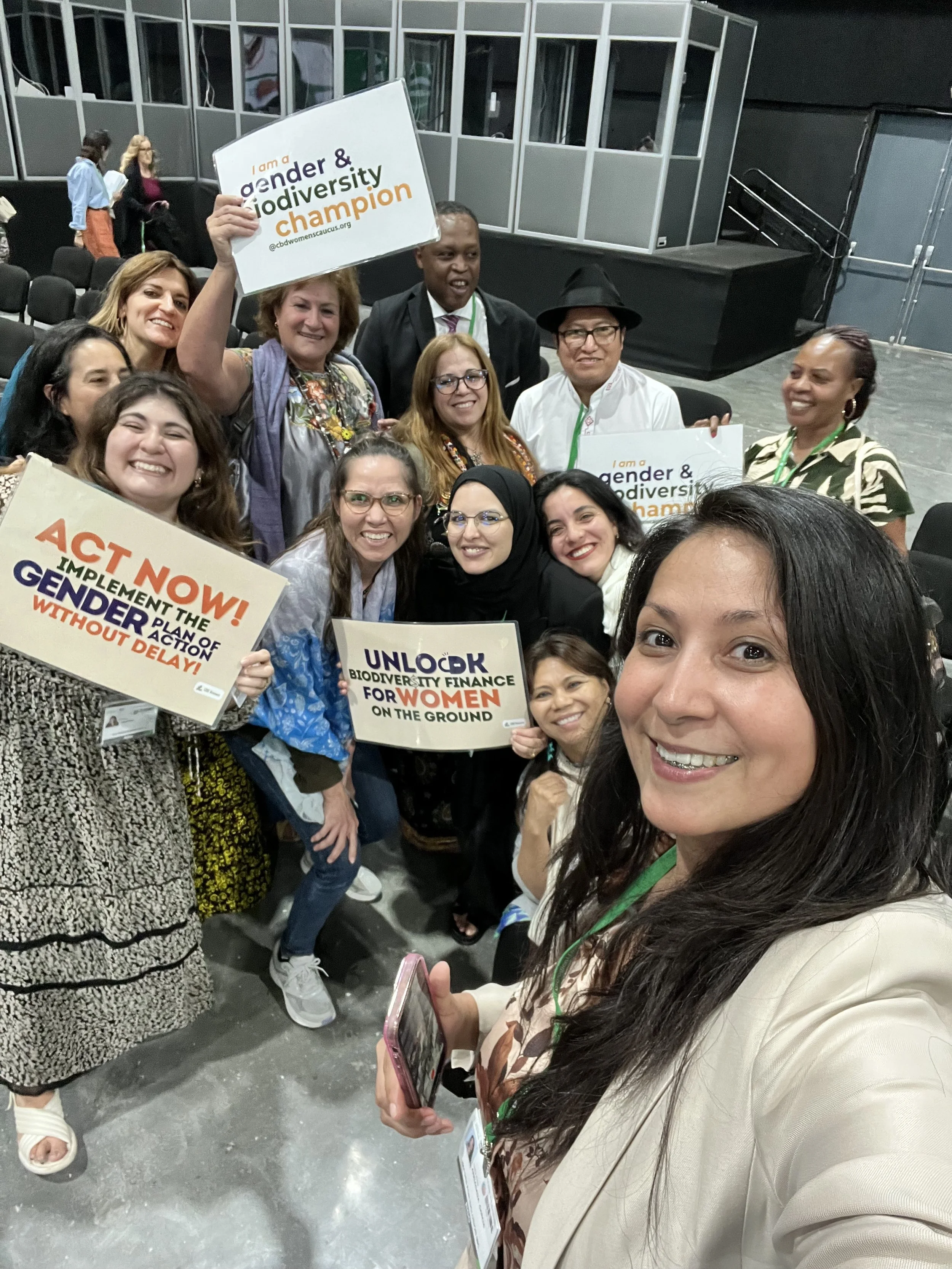
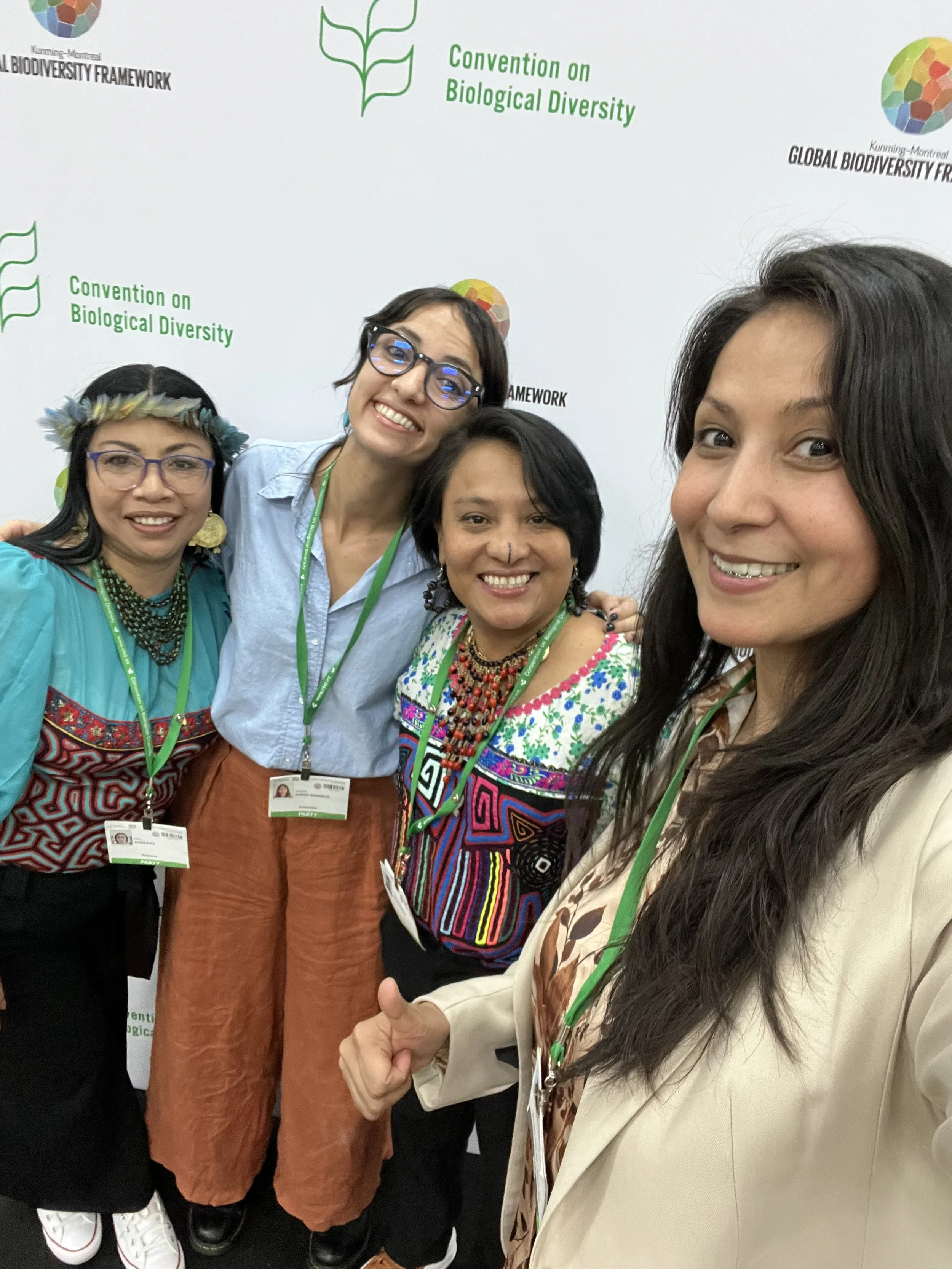
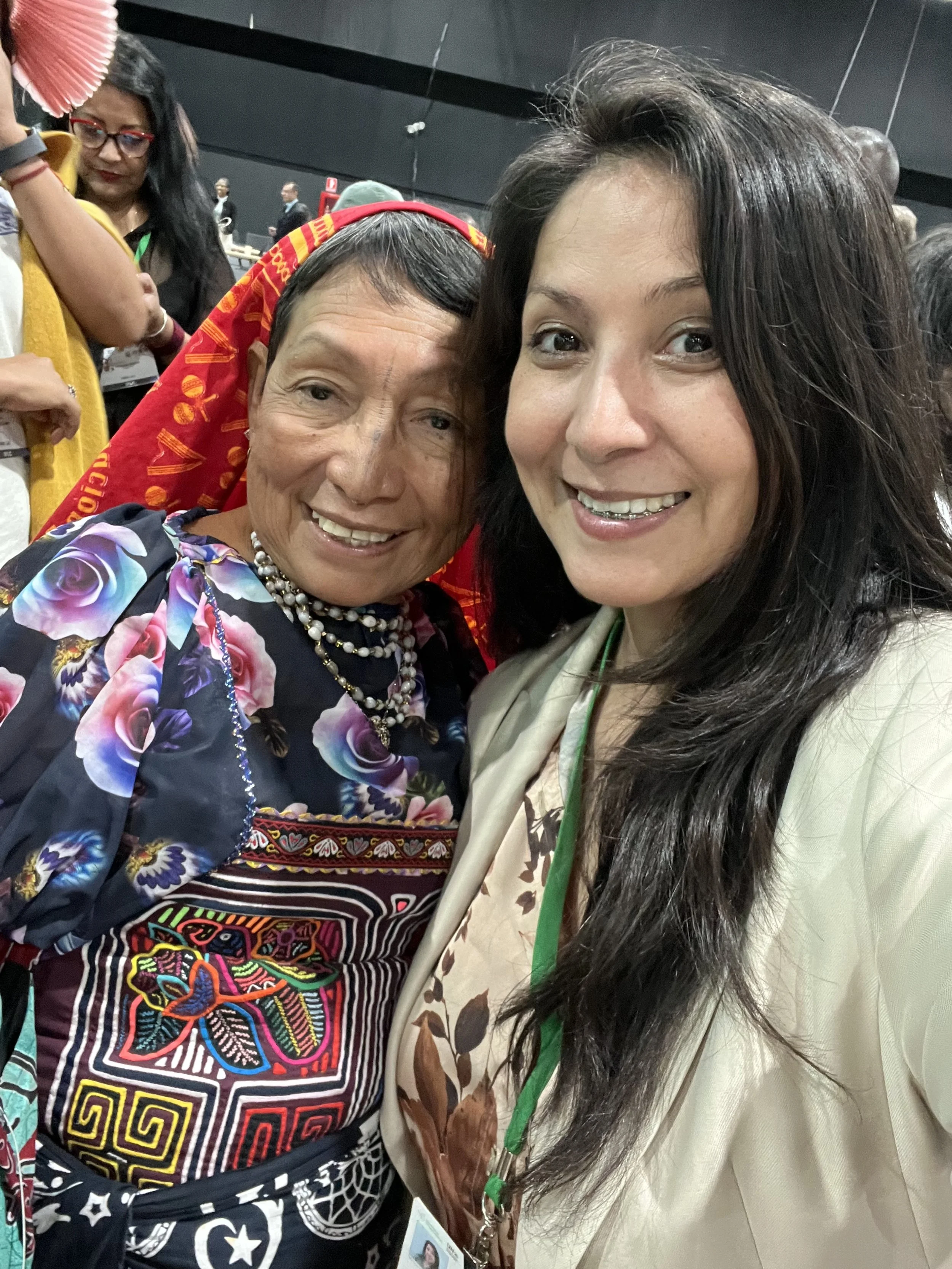
IFI President and CEO Lidia Arriagada Garcia with participants of the Indigenous Peoples’ Caucus at SB8J-1 in Panamá.
Indigenous Territories, FPIC and Self-Determination
A central focus of SB8J-1 was the role of Indigenous and Traditional Territories in biodiversity conservation, restoration and spatial planning.
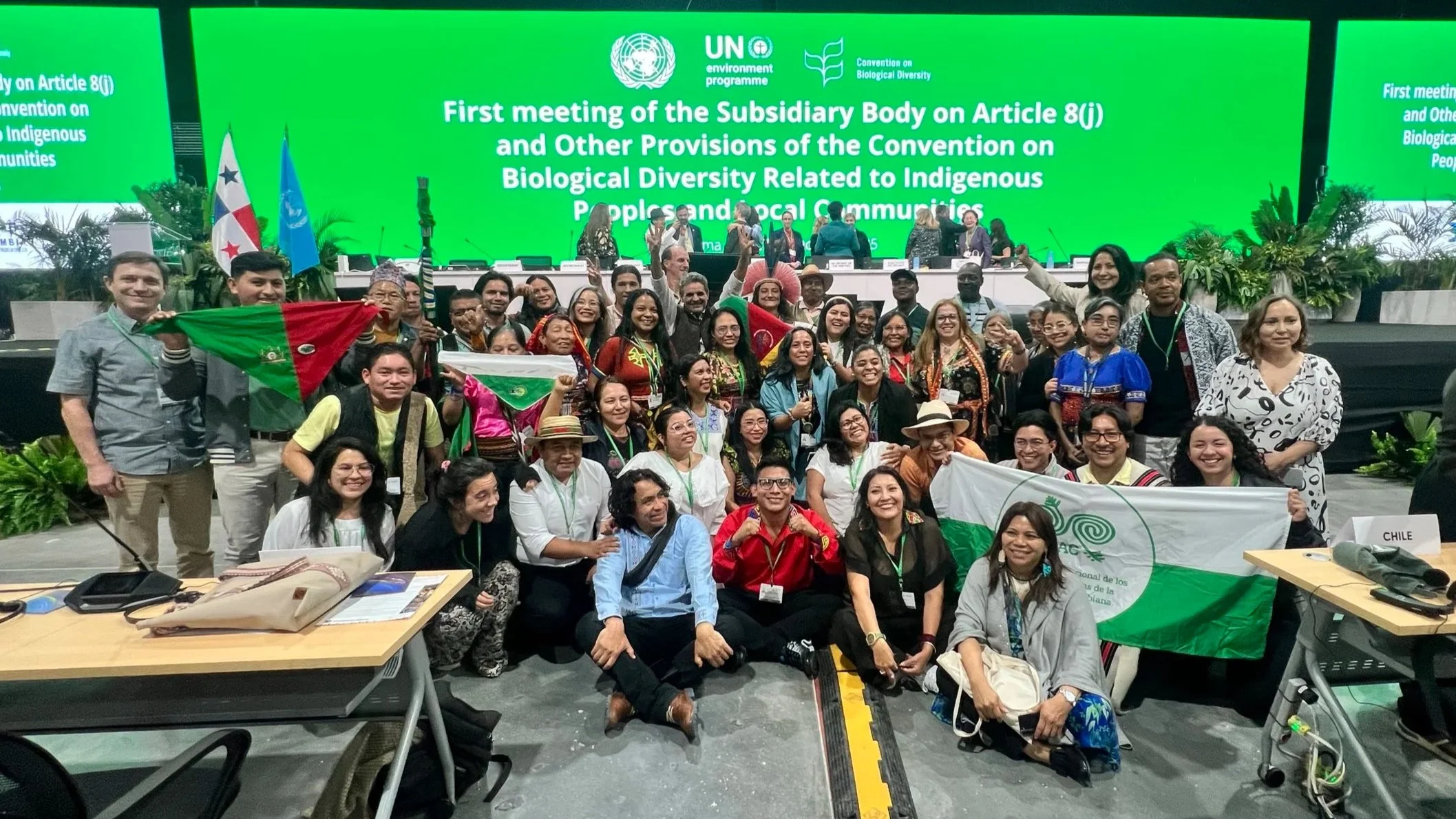
Lidia Arriagada Garcia alongside indigenous participants of the Indigenous Peoples’ Caucus at SB8J-1 in Panamá.
The discussions addressed customary tenure and governance systems, Indigenous Peoples’ relationships with their lands, waters and territories, traditional knowledge and participation in decisions affecting Indigenous territories. The negotiating text also addressed a human rights-based approach and protection of traditional knowledge.
The negotiations also reached the fundamental issue of self-determination. During discussions concerning Indigenous representative institutions, Canada raised concern about States determining which institutions should be considered “legitimate,” while Colombia emphasized the importance of self-determination.
These discussions were especially relevant to IFI. At COP16, the organization had already emphasized that Indigenous Peoples hold distinct collective rights under international law, including self-determination, rights to lands, territories and resources, and FPIC, and warned against approaches that could dilute those specific protections.
Full and Effective Participation
Another central question was what full and effective participation should mean in practice.
The discussions addressed Indigenous Peoples’ participation in decision-making concerning territories, conservation and other biodiversity measures, as well as recognition of customary governance systems and Indigenous institutions.
For IFI, meaningful participation cannot simply mean being present in the room. Indigenous Peoples must be able to influence the decisions that concern their territories, rights, governance systems, knowledge and futures.
The negotiations also examined how Indigenous Peoples’ own contributions to conservation could be properly recognized. Arriagada Garcia emphasized the importance of mechanisms capable of making visible the conservation carried out by Indigenous Peoples within their territories rather than allowing those contributions to disappear within broader conservation categories.
This was one of the most important dimensions of the meeting: recognition not simply of Indigenous Peoples as participants in biodiversity policy, but as knowledge holders, rights holders and peoples whose territories and governance systems make indispensable contributions to protecting biodiversity.
Traditional Knowledge, Languages and Accessibility
The negotiations addressed recognition and protection of Indigenous knowledge systems and the roles of Indigenous women, youth, elders and knowledge holders in maintaining and transmitting knowledge across generations.They also addressed a practical issue with profound consequences for participation: language.
Arriagada Garcia documented discussions concerning access to information in Indigenous languages, including the reality that some Indigenous languages do not have written forms and the need to consider appropriate ways of making information and technical support accessible.
This issue has been a continuing concern for IFI. At COP16, Arriagada Garcia has observed that the absence of Spanish interpretation in negotiation spaces often prevents many Indigenous participants from fully understanding proceedings.
Linguistic accessibility is not secondary to participation. It is one of the conditions necessary for participation to be genuinely full and effective.
Direct Access to Resources
SB8J-1 also addressed one of the most important practical questions facing Indigenous Peoples within global biodiversity processes: direct access to resources.
The meeting’s in-depth dialogue considered strategies for mobilizing financial resources and ensuring access to funding, capacity-building, development and technical support for Indigenous Peoples and local communities, including women and youth, in implementing the Kunming-Montreal Global Biodiversity Framework.
Importantly, the discussion addressed direct access to funding and connected implementation of the Article 8(j) Programme of Work with a human rights-based approach.
For IFI, this distinction matters. Indigenous Peoples cannot continually be recognized internationally for their contributions to biodiversity while facing barriers to the resources necessary to protect their territories, maintain their knowledge systems and determine their own priorities.
A Historic Achievement — and Work Still Ahead
SB8J-1 was both a celebration and a reminder of the work still ahead.
The establishment of a permanent body dedicated to Article 8(j) was historic. Yet throughout the meeting, Parties continued negotiating the precise meaning and scope of language concerning FPIC, self-determination, territories, governance, traditional knowledge, participation, conservation and resources.
IFI’s participation allowed the organization to see this process from several interconnected spaces: the Indigenous Peoples’ Caucus, dialogue and exchanges with Indigenous participants, the plenary proceedings and the detailed negotiations themselves.
For Lidia Arriagada Garcia, following these negotiations first-hand also provided continuity with the work undertaken at COP16. In Cali, IFI participated while Indigenous Peoples were still fighting for the establishment of this permanent institutional space. In Panamá, IFI returned to participate as that body began its work.
The Need to Distinguish Indigenous Peoples and Local Communities
While the establishment of the permanent Subsidiary Body on Article 8(j) represents a historic achievement, IFI remains concerned about the continued conflation of Indigenous Peoples and local communities within the Convention on Biological Diversity. The two terms should not be treated as interchangeable or amalgamated in ways that dilute Indigenous Peoples’ distinct status and rights under international law.
Indigenous Peoples are rights-holders, with distinct individual and collective rights recognized under the United Nations Declaration on the Rights of Indigenous Peoples (UNDRIP) and other international human rights instruments and standards. These include the rights to self-determination; lands, territories and resources; culture and identity; traditional knowledge; participation through their own representative institutions; and Free, Prior and Informed Consent (FPIC). Local communities, as a category, do not hold the distinct rights of Indigenous Peoples under international law. They are not Indigenous Peoples, and the two categories must not be conflated.
This distinction has also been emphasized by the United Nations mechanisms specifically mandated to protect and promote the rights of Indigenous Peoples, which have warned against conflating, combining or equating Indigenous Peoples with local communities and other non-Indigenous groups.
For IFI, this is not a debate over terminology. It is about protecting Indigenous Peoples’ inherent rights. Recognition of the important contributions of local communities to biodiversity must not come at the cost of undermining Indigenous Peoples’ distinct individual and collective rights, representative institutions, legal protections and self-determination. As the new Subsidiary Body develops its work, IFI will continue to advocate for the clear distinction between Indigenous Peoples and local communities and for the unique individual and collective rights of Indigenous Peoples to be explicitly recognized, respected and protected throughout international biodiversity processes.
From supporting the process that led to the establishment of the permanent Subsidiary Body at COP16 to participating in its historic first meeting in Panamá, Images for Inclusion Inc continues to stand alongside Indigenous Peoples around the world in advocating for international biodiversity processes in which their voices are heard, their rights are respected, their knowledge is valued and their participation is significant and has meaningful influence in decision-making processes.
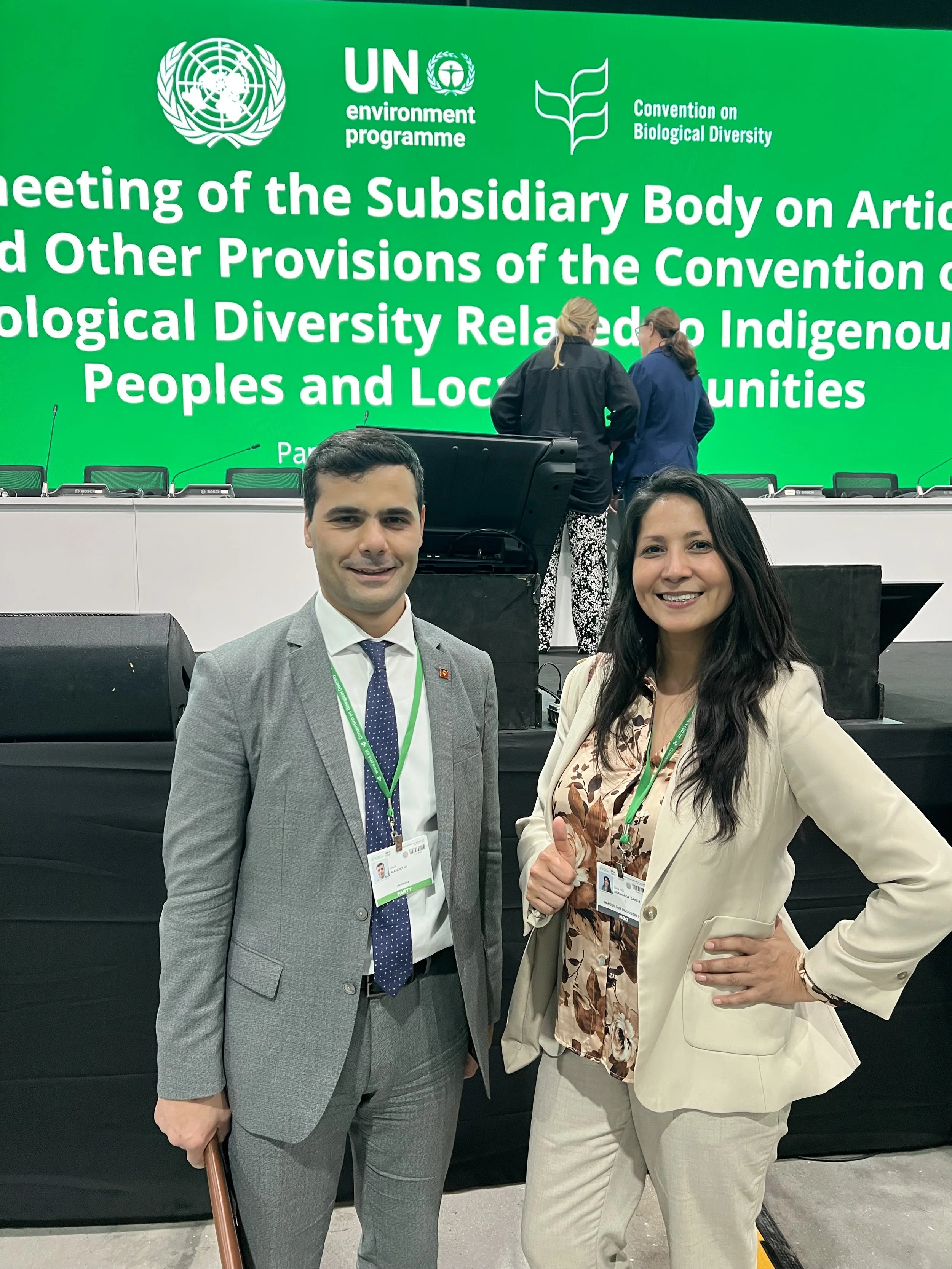
IFI President and CEO Lidia Arriagada Garcia with Mher Margaryan, Ambassador and COP17 Chief Negotiator of the Republic of Armenia, during SB8J-1 in Panamá.
From Panamá Toward COP17
The first meeting of SB8J was a beginning, not an endpoint.
Panamá brought together Indigenous Peoples from all regions, languages and cultures, alongside Parties and other participants, to begin shaping the work of this historic new Subsidiary Body on Article 8(j). IFI is grateful for the conversations, knowledge, generosity and experiences shared throughout these days and for the opportunity to participate in this important moment. The work now continues toward COP17 in Yerevan, Armenia, in 2026.
During SB8J-1, IFI President and CEO Lidia Arriagada Garcia had the opportunity to speak with Mher Margaryan, Ambassador and COP17 Chief Negotiator of the Republic of Armenia, and to raise, among other matters, the importance of English-Spanish interpretation during COP17 negotiations. The concern reflects IFI’s experience at COP16 in Cali, where interpretation was not consistently available during negotiations.
IFI deeply respects the linguistic diversity of Indigenous Peoples, many of whom participate while speaking and preserving their own Indigenous languages. At the same time, Spanish is widely used by Indigenous representatives from the Latin American and Caribbean sociocultural region, making linguistic accessibility an important component of full and effective participation.
Looking ahead to COP17, IFI is also facilitating the participation of an experienced English-Spanish interpreter as part of its delegation, contributing in this way toward a more linguistically inclusive experience and supporting greater accessibility within the spaces in which we participate.
As the CBD community moves toward COP17 in Yerevan, IFI remains grateful for the people we met in Panamá, the knowledge and experiences shared, and the collective work undertaken during this historic first meeting.
We look forward to continuing this engagement alongside Indigenous Peoples and all those committed to protecting biodiversity while respecting Indigenous Peoples’ rights, knowledge, territories, cultures, spirituality and self-determination, and to carrying this work forward at COP17.
IFI looks forward to COP17 in Yerevan and welcomes the opportunity to continue engaging in this important process through dialogue, cooperation and mutual respect, while contributing to the full and effective participation of Indigenous Peoples.