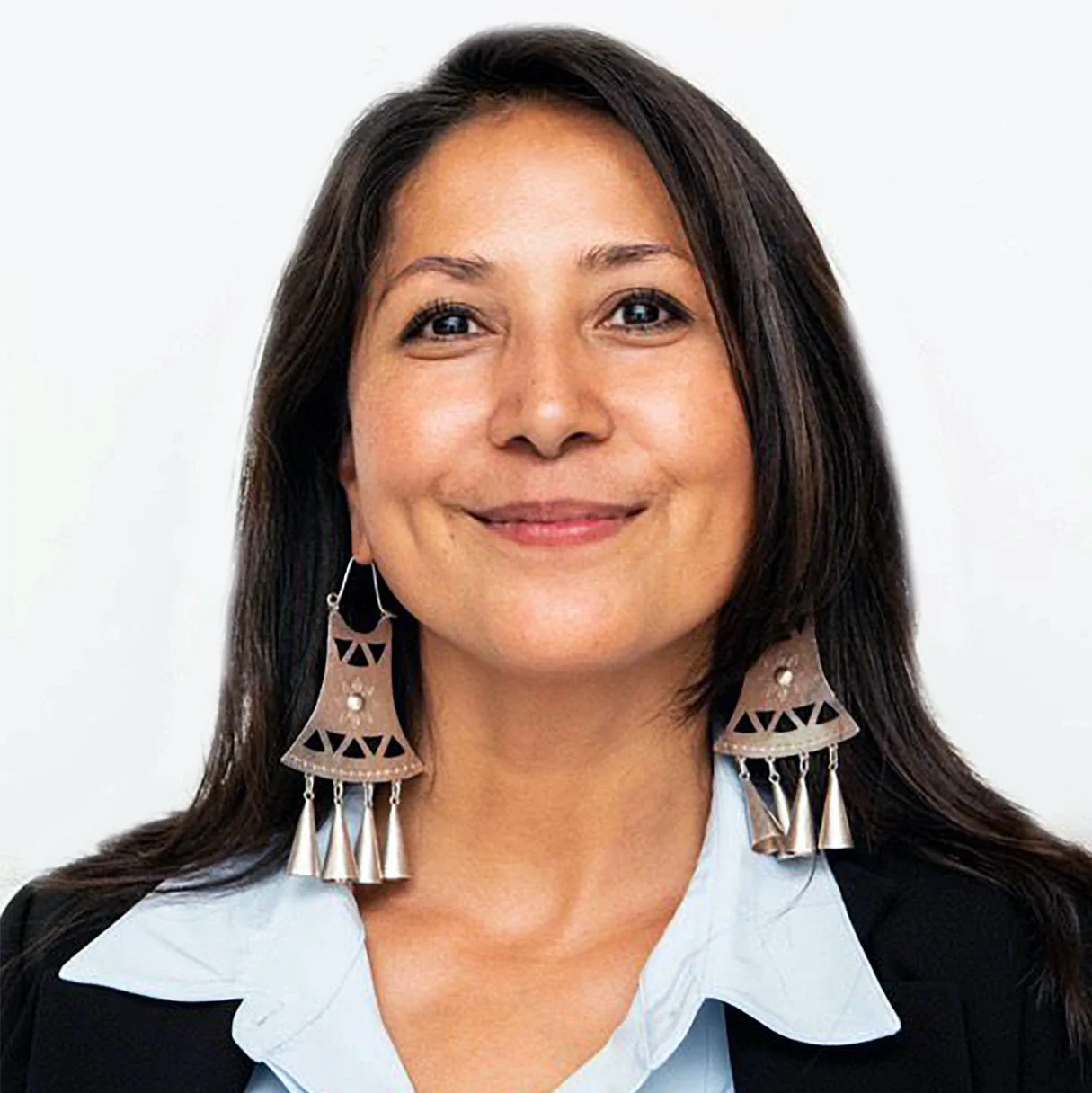
The president & CEO of our NGO participated in a Conversation on “the current challenges of Indigenous Policy,” in Santiago, Chile
Santiago, Chile, August 9, 2026.— The President and CEO of Images for Inclusion Inc (IFI), Lidia Arriagada García was invited to participate in the Conversation on “Current challenges of Indigenous Policy”, held at the Ceremonial Center of Indigenous Peoples of Peñalolén, at the invitation of Juana Linconao, President of the Waiqui Foye organization and host of the meeting. The event took place within the framework of the 22nd Indigenous Peoples Expo of Peñalolén, a celebration of cultural diversity. The initiative was organized by, among others, the Cultural Corporation of Peñalolén.
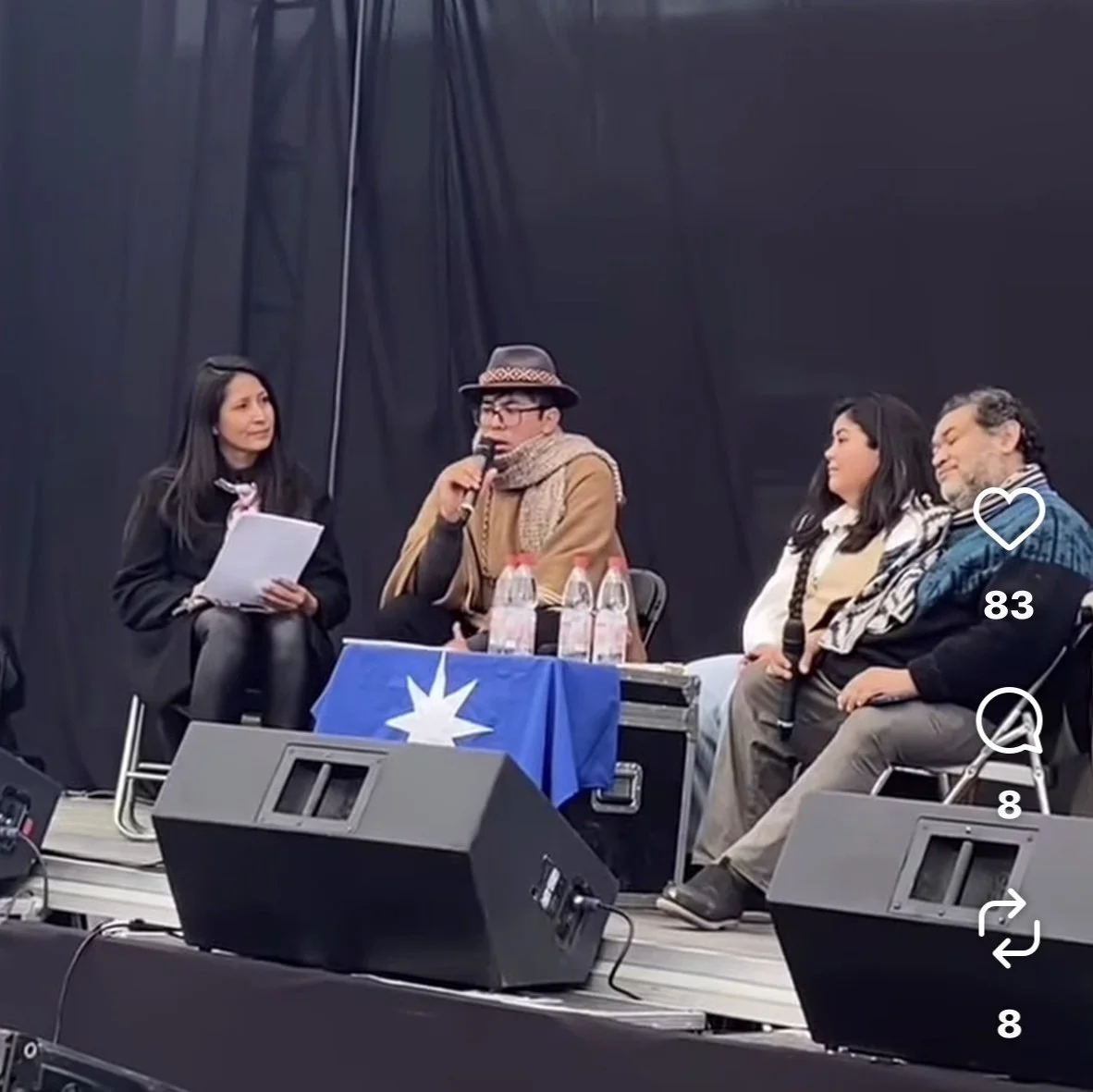
Image Capture: Video chimkowe.cl. August 09, 2026. Santiago, Chile. From left to right: Lidia Arriagada García, Samuel Yupanqui, Rayen Alarcón and Salvador Millaleo.
Official Disclaimer: The views and opinions expressed during this Conversatorio are those of the individual participants and do not necessarily reflect the views, positions, or policies of Images for Inclusion Inc, a non for profit charity organization. IFI is an independent and non-partisan organization, unaffiliated with any political party or political movement. Our work is guided by our commitment to human rights, education, and informed public dialogue. In this spirit, IFI supports access to public information on matters affecting Indigenous Peoples, consistent with Articles 15 and 16 of the United Nations Declaration on the Rights of Indigenous Peoples (UNDRIP), which recognize Indigenous Peoples’ rights in relation to education, public information, and access to media without discrimination.
The discussion brought together Salvador Millaleo (Mapuche Lawyer and Academic), Rayen Alarcón (Mapuche Law Graduate) and Samuel Yupanqui (Quechua sociologist) to analyze the main challenges currently facing indigenous policy in Chile, including the absence of institutional responses, the risks of backsliding on rights, the self-determination of Indigenous Peoples, indigenous participation and consultation, the effective capacity to influence decisions, indigenous institutions, representation from the territories, the leadership of indigenous women, and the political, legal, and community strategies needed to move forward.
Images for Inclusion Inc (IFI) also played a central role in leading the meeting. Lidia Arriagada García, founder, President and Executive Director of IFI, moderated the discussion and developed and formulated the questions that structured the dialogue between the panelists guiding the discussion from the diagnosis of current indigenous policy towards self-determination, effective participation, consultation, representation and, finally, concrete proposals for change.
Our NGO, Images for Inclusion Inc, is a non-profit organization based in New York and Chile and has Consultative Status with the United Nations Economic and Social Council (ECOSOC) since 2022. In this capacity, IFI participates in various United Nations forums related to the rights of Indigenous Peoples, including the Permanent Forum on Indigenous Issues, the Expert Mechanism on the Rights of Indigenous Peoples, the Human Rights Council, and the Conference of the Parties to the Convention on Biological Diversity.
A dialogue about who defines Indigenous Policy and who has the power to decide.
From the outset, the discussion sought to go beyond a general diagnosis of the relationship between the State and Indigenous Peoples. In introducing the meeting, Lidia Arriagada García emphasized the importance of developing this discussion within a space belonging to Indigenous Peoples and to ask not only what problems persist, but also What transformations are needed, who should participate in defining them, and what role should Indigenous Peoples themselves play in building these responses?.
Based on that premise, the first question posed by the moderator invited the three panelists to identify the main challenges currently facing indigenous policy in Chile.
“The reality is that so far there is nothing.”
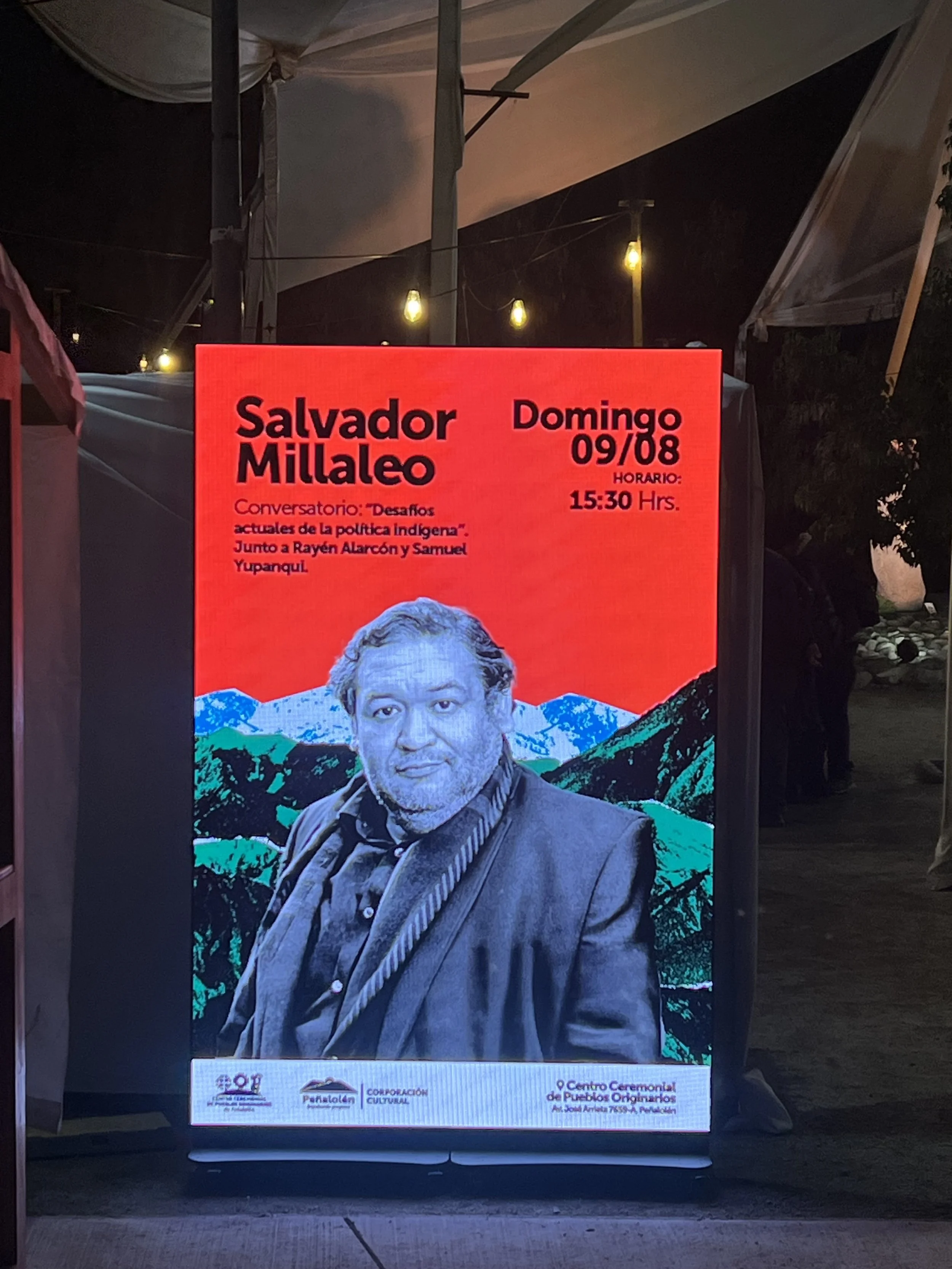
Image Capture: At the Event. August 08, 2026. Santiago, Chile.
Salvador Millaleo opened the diagnosis by pointing out that the measures announced by the President of the Republic on June 1st had not yet begun, that there was no clarity on their deadlines, and that the elected indigenous councilors of CONADI (the National Corporation of Indigenous Development) had not yet taken office. His conclusion was categorical:
"The first thing is that there should be an Indigenous Policy, and the reality is that so far there is Nothing."
Millaleo also added an electoral dimension to the debate, pointing out that significant sectors of the Mapuche and Aymara population voted for the right and the far right, and that “not even those people who trusted that political project” were receiving a response.
Rayen Alarcón complemented the diagnosis by pointing out that those who voted for the current government are precisely the ones who should demand the fulfillment of what was promised to them. She also stressed that Indigenous Peoples throughout Chile continue to face “outstanding debts” owed by the State and argued that Indigenous Peoples themselves need to “start talking more” and “return to our roots.” Alarcón also identified another structural problem, observing that Indigenous Peoples are accepted within the State “culturally, but not from a political position,” and raised the need to strengthen alliances among organizations, Indigenous professionals and territories to build common goals and their own political position.
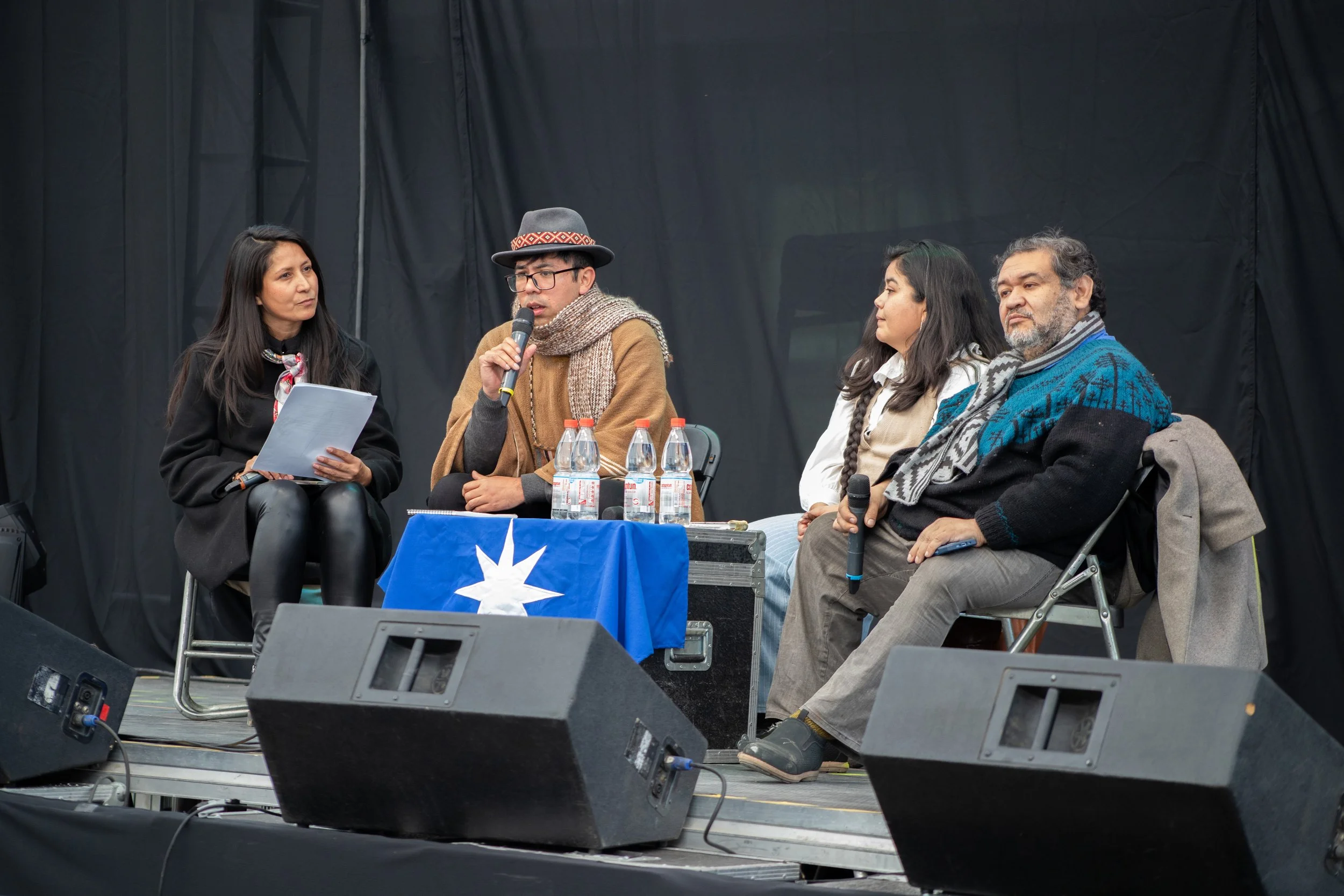
Photography: Courtesy of the Peñalolén Cultural Corporation. From left to right: Lidia Arriagada García, Samuel Yupanqui, Rayen Alarcón and Salvador Millaleo.
Acquired rights at risk
Samuel Yupanqui offered an even more severe diagnosis, describing the current situation as one of uncertainty and warning of a State orientation that could lead to setbacks in rights already gained. In particular, he raised concerns about the future of the Lafkenche Law and the protection of Indigenous Peoples’ rights in relation to Coastal Marine Spaces of Indigenous Peoples (ECMPOs), expressly warning that “The Lafkenche law is in serious danger right now.”
The Lafkenche Law (Law No. 20.249), enacted in 2008, created a legal mechanism through which Indigenous communities and associations can seek recognition of Coastal Marine Spaces of Indigenous Peoples (ECMPOs) in order to safeguard customary uses of coastal and marine areas. Yupanqui’s warning comes amid renewed political pressure on the law: the current government has identified its modification as part of its legislative agenda, while a separate proposal introduced in the Chamber of Deputies has called for legislation to repeal Law No. 20.249 altogether. These developments have placed the future scope and protection of ECMPOs—and the Indigenous customary uses and coastal rights recognized through this framework—under significant political uncertainty.
Yupanqui also referred to the Indigenous consultation associated with the implementation of Chile’s Biodiversity and Protected Areas Service (SBAP), stating that “the data from the consultation was lost, and therefore they would not be taking it into account.” Specifically, the original list of signatures of the Indigenous representatives who signed the Record of Agreements and Disagreements was lost and had not been incorporated into the official administrative record. Subsequent efforts to reconstruct the signatures failed to recover the complete documentation, preventing the full traceability and validation of the agreements and disagreements reached with Indigenous representatives during the consultation. As a result, the Ministry of the Environment initiated proceedings to invalidate the administrative acts that had formally closed the consultation, stating that the measure sought to correct the irregularities, safeguard the rights of Indigenous Peoples, and ensure the lawful, transparent, and legitimate implementation of the SBAP. Against this context, Yupanqui maintained that there is a policy that “is not declared” but nevertheless produces negative effects on Indigenous rights.
Faced with this scenario, Yupanqui called for strengthening the organization from the grassroots level and made one of the most forceful statements of the meeting:
"Right now, the State is saying that we shouldn't exist."
For Yupanqui, the response must include the protection of what the Peoples themselves consider essential: “Our language, our culture, our idiosyncrasies, our worldview.”
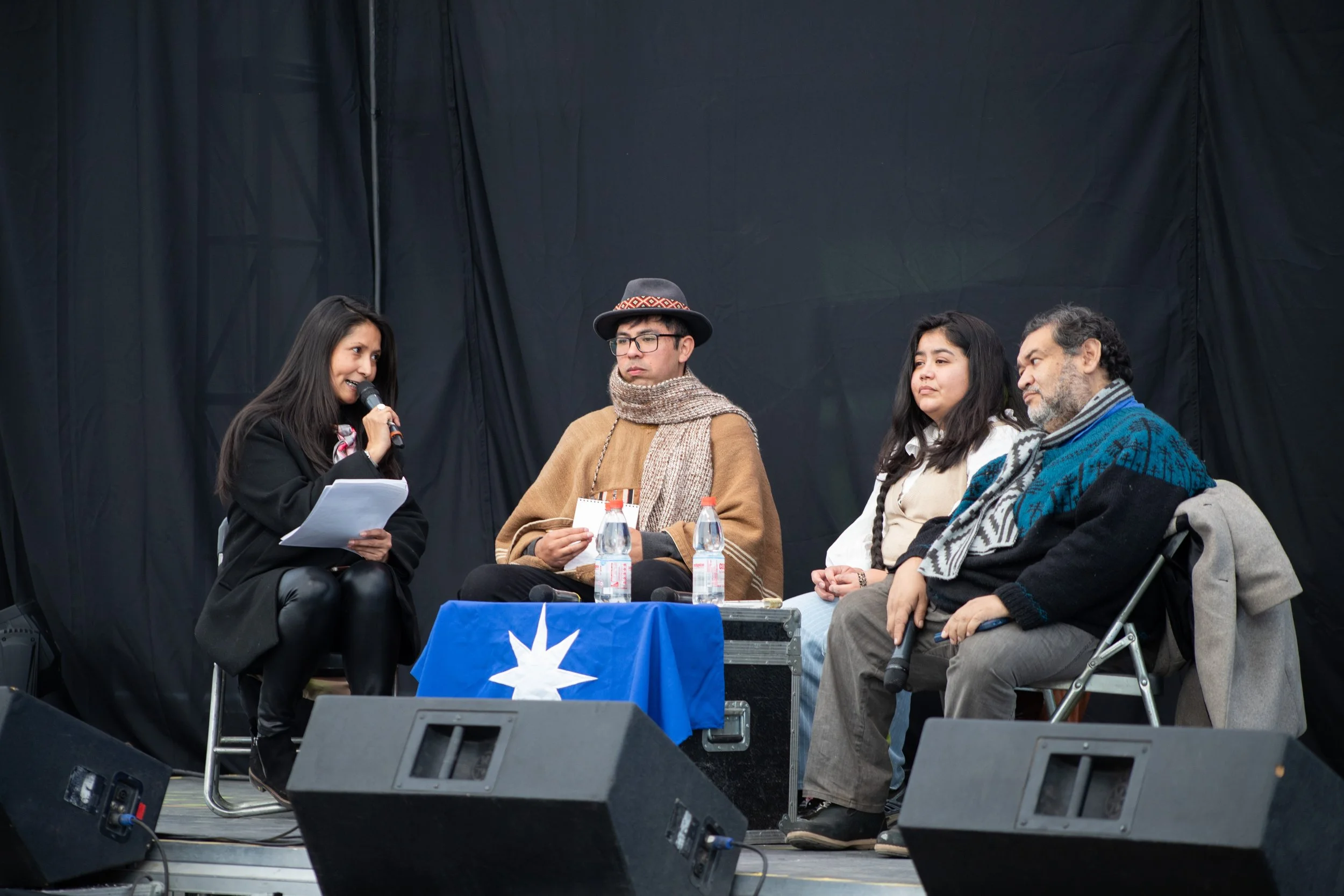
Photography: Courtesy of the Peñalolén Cultural Corporation. From left to right: Lidia Arriagada García, Samuel Yupanqui, Rayen Alarcón and Salvador Millaleo. .
Self-determination: from formal recognition to the capacity to exercise it
The moderation then steered the conversation towards self-determination, raising the question of whether the challenge lies in moving from a policy historically constructed by the State towards Indigenous Peoples to a model in which Indigenous Peoples themselves, from their institutions and priorities, participate in defining their present and their future.
Samuel Yupanqui described the possibility of achieving that goal under current conditions as almost “surreal”, comparing it to imagining “Virtual settings of Marvel parallel universes”. In his view, moving towards self-determination requires empowered organizations, concrete struggles, common guidelines, and the rebuilding of the social fabric.
Salvador Millaleo approached the problem from another perspective. He argued that self-determination “isn't something that just happens naturally, that's there and appears out of nowhere. And it's not something that anyone is going to give you from the government either.”
Millaleo placed particular emphasis on the responsibility of Indigenous Peoples themselves to build the conditions necessary for the exercise of self-determination. Referring to the historical loss of that right through colonization, he posed a question that he considered fundamental:
“We believe that the State is the one that has taken away our self-determination, and that was clear with colonization. But what do we do, or what are we doing, to win it back now? That is the question that I think is key. What do we do?”
He extended that challenge to the economic sphere, questioning whether self-determination could be understood simply as receiving State funding while Indigenous communities and organizations lacked viable economic projects of their own. His intervention therefore shifted the discussion from the recognition of self-determination as a right to the practical question of how Indigenous Peoples build the capacities, organization and economic foundations necessary to exercise it in practice.
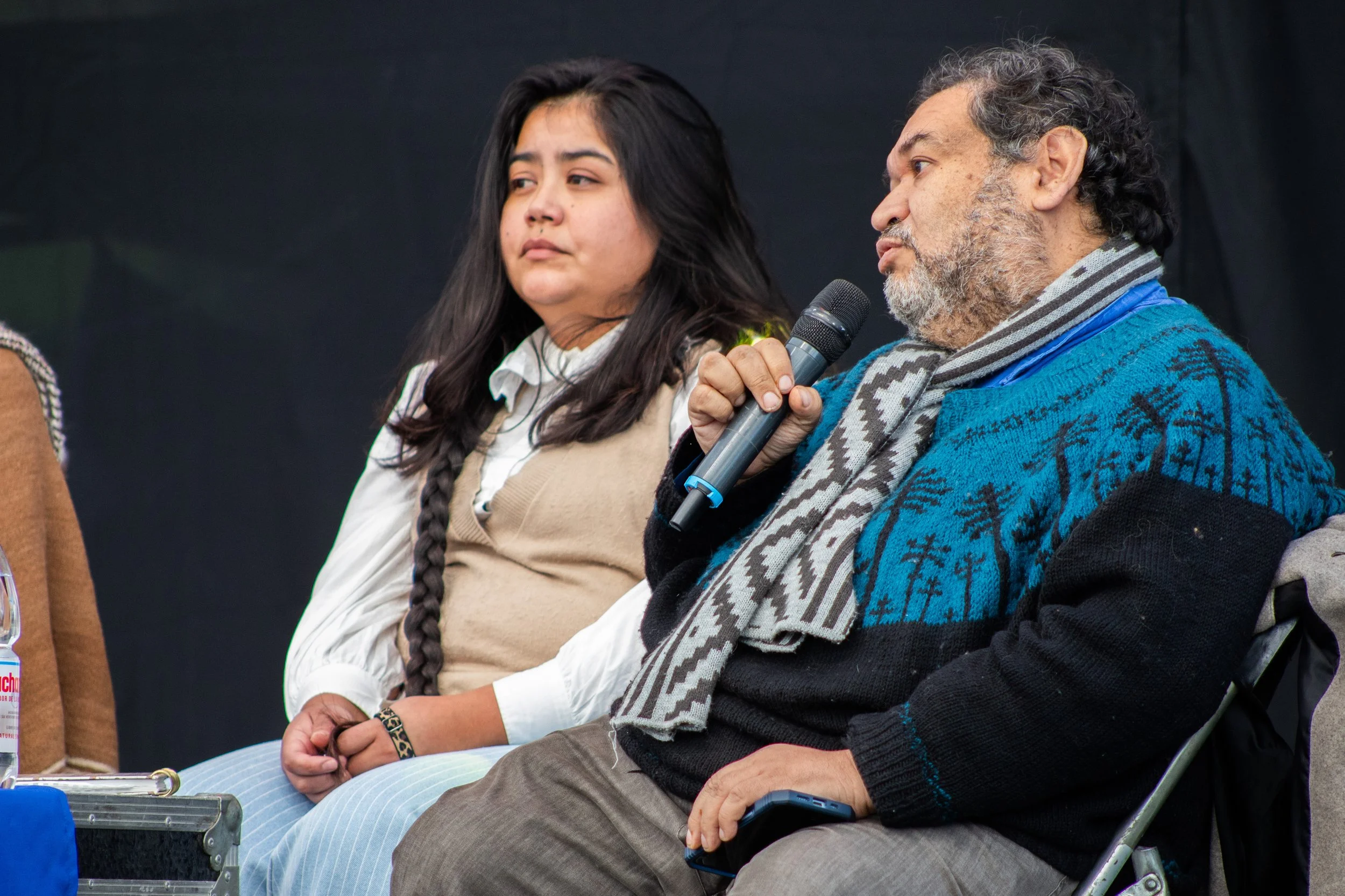
Photography: Courtesy of the Peñalolén Cultural Corporation. From left to right: Rayen Alarcón and Salvador Millaleo.
He stated:
“At the economic level, we think that self-determination means that the State should allocate funding to us, and then we are going to ask the State for everything. What kind of self-determination is that? We do not have a viable economic project for our rural communities, for our associations, for our peñi and lamngen in rural areas. So, what are we going to do with self-determination? What do we really want it for?”
He also recalled that one of the objectives of the constitutional processes had been to achieve formal recognition of self-determination and that, after those defeats, viable alternatives are still needed.
Self-determination as “a north”
Offering a somewhat less discouraging vision than Millaleo, young Mapuche law graduate Rayen Alarcón acknowledged that Indigenous Peoples in Chile remain “far” from self-determination, but described it as “a north” toward which they should move. Rather than envisioning such a major leap without a transition, she argued that Indigenous Peoples must first take ownership of the rights they already have, demand that the State fulfil its obligations, reorganize their own ways of seeing and acting, and be able to communicate to non-Indigenous society that, even while navigating dominant society, they retain particular characteristics that make them distinct. For Alarcón, this must be built “in community, collectively.” In the present context, which she viewed as one of preventing regression in already-won rights rather than advancing new ones, she called for strategically focusing their efforts and resisting during the coming four years, while remaining open to dialogue without bargaining away Mapuche principles and values.
Video Contribution: Estelita. August 09, 2026. Santiago, Chile.
Effective participation: being heard or having the power to decide?
Another central point raised by the moderator was what conditions the participation of Indigenous Peoples must meet to be considered valid, effective and not merely formal.
Lidia Arriagada García later summarized that discussion with a direct question: "Do you believe that participating means being heard, or does it mean having a real ability to change a decision?"
Samuel Yupanqui responded from the perspective of existing institutional asymmetry, pointing out that indigenous organizations in Chile carry weight “Just like a neighborhood association, more or less, maybe even less.” He also questioned the fact that the elections of indigenous councilors of CONADI are administered by the institution itself and raised the need to have sufficiently strong indigenous institutions to protect rights and have an impact on the State.
Indigenous consultation: progress achieved and new threats
Salvador Millaleo introduced an important distinction here. Despite his generally critical diagnosis, he maintained that indigenous consultation under the ILO Convention 169 constitutes one of the areas that has indeed gained strength in Chile. He explained that approximately fifteen years ago, many consultations were merely formalities, and numerous decisions were not even subject to consultation. Since then, he noted, the law has become progressively institutionalized, and the courts have begun to take it seriously.
However, he identified significant gaps in parliamentary motions, investment projects, and standards for prior consultation, information, and good faith. He also warned of a new threat: according to Millaleo, the expansion of the right to consultation “has made governments nervous,” generating attempts to establish “fast tracks or fast lanes for project consultations. All of that is going to be a threat to indigenous people, and we should have strategies to confront it.”
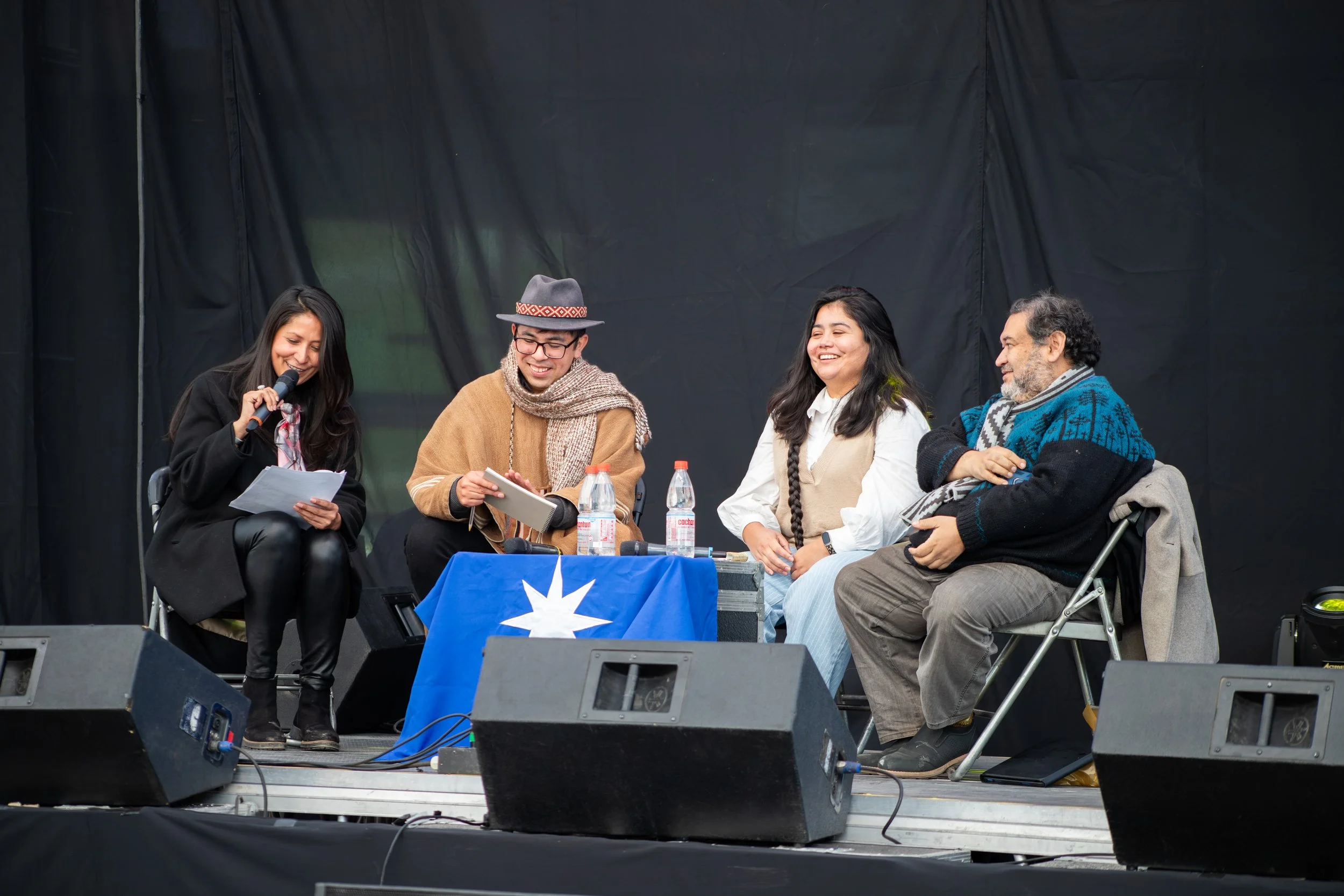
Photography: Courtesy of the Peñalolén Cultural Corporation.
Indigenous women, territorial legitimacy and Indigenous leadership
Lidia Arriagada García brought an important gender dimension to the discussion and specifically invited Rayen Alarcón to address the issue from the perspective of the rights of Indigenous women. The moderator asked how an Indigenous policy built with greater autonomy and participation could effectively incorporate the voices of Indigenous women, youth, elders and different territories, without the State determining who represents whom.
Alarcón observed that Indigenous politics—particularly Mapuche politics—has historically been shaped by a male perspective, despite the prominent role women already play as leaders of communities and organizations. She emphasized Indigenous principles of duality, walking together and dialogue, and argued that representation should arise from the legitimacy existing within the territories and organizations themselves. She also warned that, in the absence of strong Indigenous institutions and collaborative work, people who self-identify as Indigenous may, because they possess greater knowledge or power, end up “speaking for us.” Alarcón therefore called on established male leaders to open pathways for women’s leadership.
During the dialogue with the public, Alarcón elaborated on her criticism of what she described as a “masculinized view of Mapuche demands.” She highlighted forms of women’s leadership connected to territorial relevance, the defence of nature, economic autonomy and collective leadership. As a concrete example, Alarcón referred to her own community, explaining that women there are the ones who meet with authorities to defend the autonomy of the cemetery, engage in dialogue with extractive industries, and remain closely connected to the needs and demands of individual families and the lof.
From diagnosis to proposals
The final question prepared by the moderator deliberately sought to shift the conversation from diagnosis to action: “If each of you could bring about a concrete change in Chile’s indigenous policy today, one that could be implemented, what would it be?”
Salvador Millaleo: He proposed concentrating efforts on “the politics of the People” through the renewal of “Leadership, ideas, and people.”
Rayen Alarcón: She called for building unity around “two, five common objectives” capable of being effectively put into practice, and warned that "Unfortunately, in our disunity, we have been trampled on."
Samuel Yupanqui: He identified as a priority the bilingual intercultural education and intercultural education in general as a tool for new generations to learn about indigenous roots and develop respect for cultural diversity and nature.
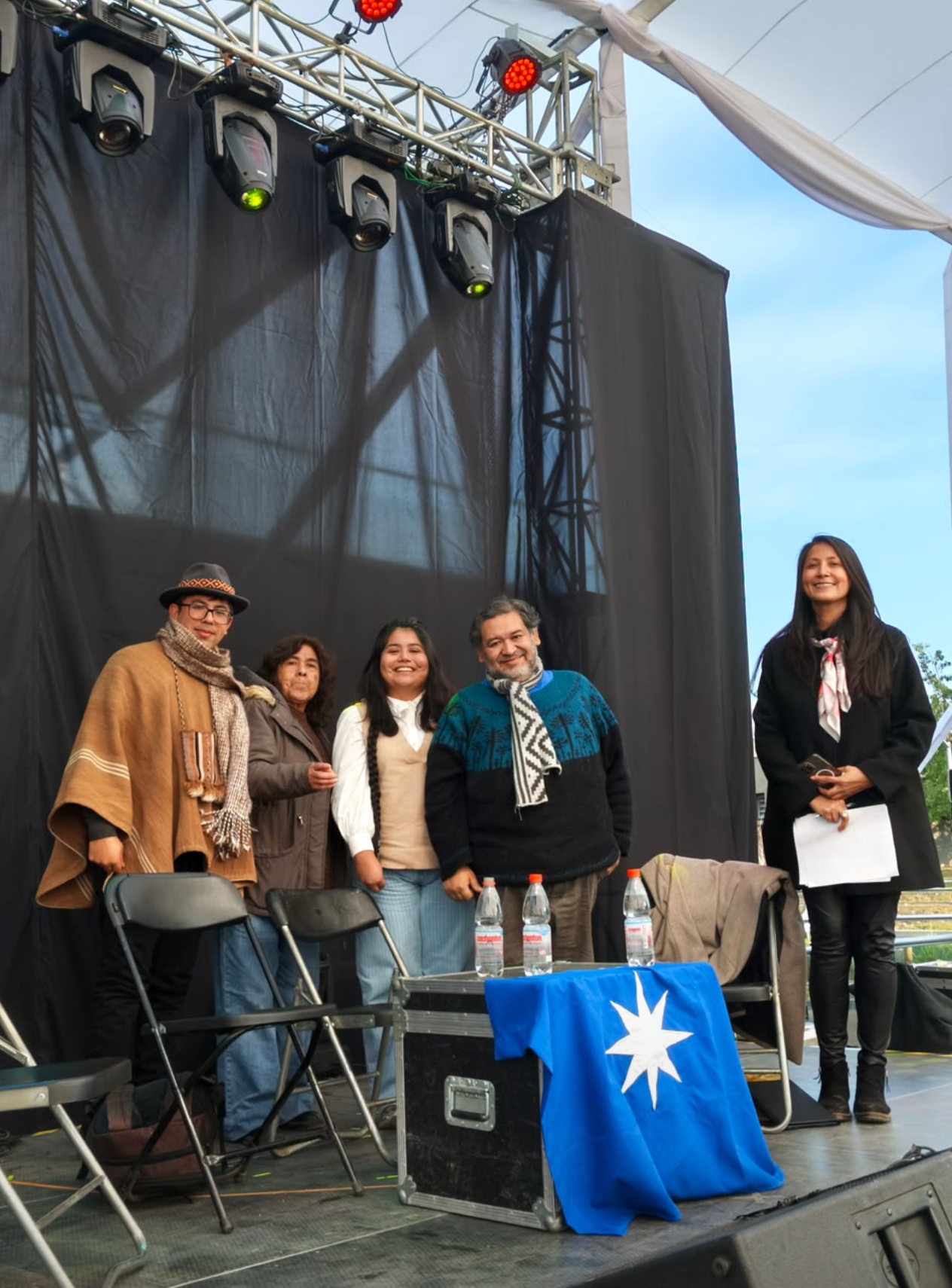
Image capture: Rayen Alarcón Whatsapp updates. August 09, 2026. Santiago, Chile.
Cultural appropriation, heritage and artistic creation
During the dialogue with the public at the end of the conversatorio, a question from the audience broadened the discussion toward Indigenous cultural heritage and cultural appropriation.
Salvador Millaleo distinguished between drawing inspiration from or paying homage to Indigenous cultural traditions and cultural appropriation, which he described as taking something that comes from an Indigenous tradition and claiming it as one’s own. He emphasized that Indigenous cultural heritage may be used, recreated and given new life, including by non-Indigenous people, but that its origin must be recognized and the elements drawn from it cannot simply be claimed as individual property. He specifically warned against the attribution of individual copyrights to traditional elements—including Mapuche songs (Ulkantun)—and stressed the need to recognize their origin and preserve the integrity and meaning of the cultural heritage being used.
“All existing Indigenous institutions are at risk”
As a response to another question from the audience, Yupanqui identified potential risks in matters of participation and consultation, environment, linguistic and cultural rights, CONADI, education and health.
His conclusion was particularly severe: “All existing Indigenous institutions are at risk.”
In response, he proposed using the available mechanisms, “To bring as many cases to court as possible, to leave a mark”, to build foundations that can later serve for international demands or future political actions. He also called for regaining influence, agency and the capacity to generate unity around what the Indigenous Peoples themselves consider essential to protect.
A conversation that must continue
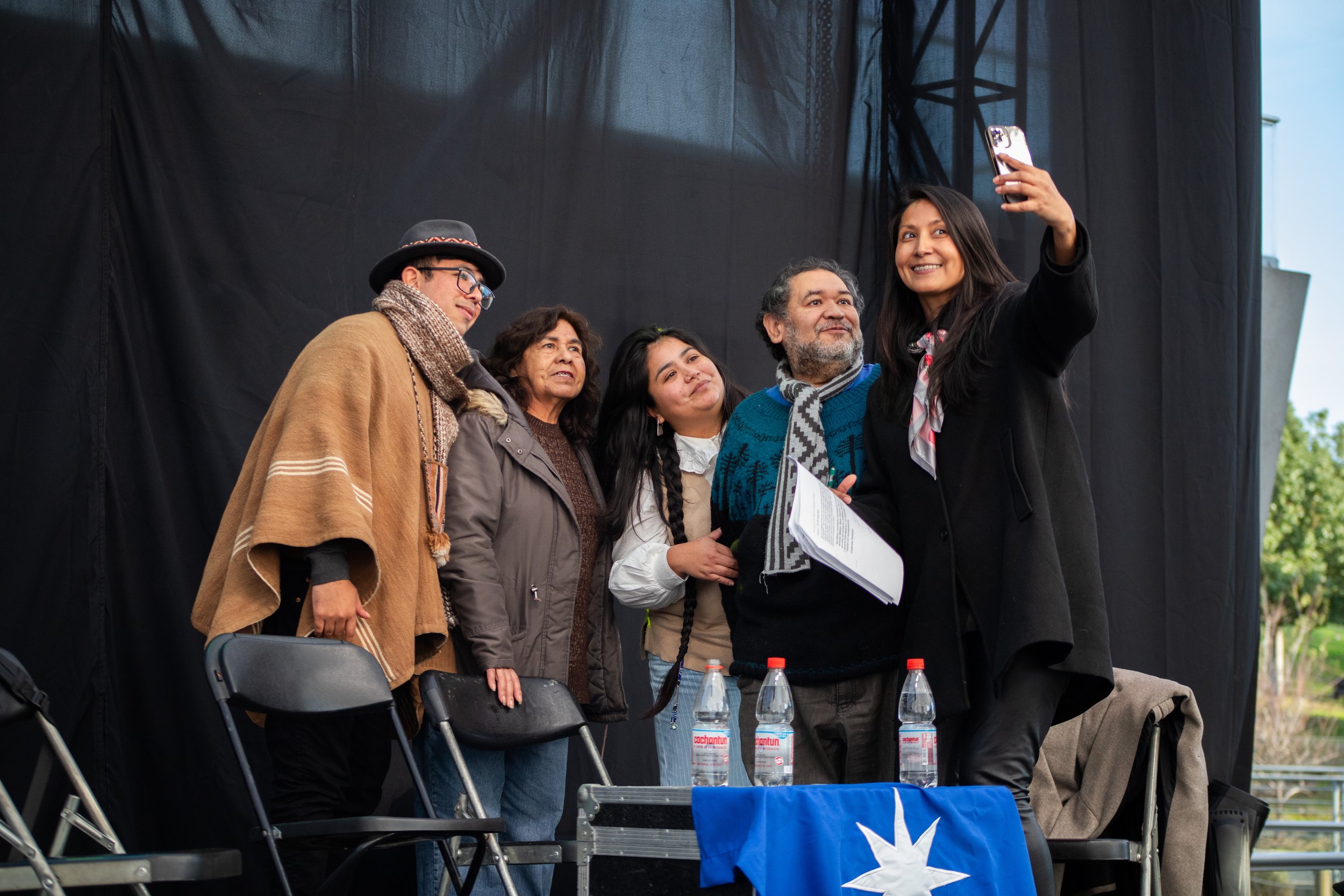
Photography: Courtesy of the Peñalolén Cultural Corporation.
At the close of the meeting, Lidia Arriagada García returned to the question that permeated the discussion: talking about the current challenges of indigenous politics also means asking oneself : Who defines the priorities, who makes the decisions, and what space do Indigenous Peoples have to determine their present and their future?
On behalf of Images for Inclusion Inc, our President especially thanked Juana Linconao and her organization, Waiqui Foye, for the invitation to participate in the discussion “Current Challenges of Indigenous Policy” and for hosting this “important and urgent” dialogue in Chile at the Ceremonial Center of Indigenous Peoples of Peñalolén.
IFI also thanks Salvador Millaleo, Rayen Alarcón and Samuel Yupanqui for sharing their knowledge, experiences, diagnoses and proposals, as well as the people who participated in the audience and enriched the conversation with their questions.
For Images for Inclusion Inc, these spaces provide an opportunity to contribute to dialogue from civil society while keeping a fundamental principle at the center: discussions about the rights, policies and future of Indigenous Peoples must include the effective participation of Indigenous Peoples themselves, their ancestral authorities, their own organizations and institutions, Indigenous communities and their territories.
Images for Inclusion Inc formally thanks the Peñalolén Cultural Corporation and its Executive Director, Julieta Brodsky Hernández for opening and supporting spaces where culture, education and dialogue can come together around issues of profound importance to Indigenous Peoples and to the country as a whole. Initiatives such as this conversatorio benefit everyone: they enable Indigenous Peoples to share their knowledge, experiences and proposals directly; bring citizens closer to their cultures, rights and realities; and offer public authorities and institutions a valuable opportunity to hear different voices, better understand the needs and perspectives of communities and territories, and strengthen the knowledge that informs their own decision-making. Continuing to support and make these gatherings possible—through venues, resources and institutional support—also allows culture to serve as a bridge for education, trust-building, broader participation and the development of more respectful, harmonious and collaborative relationships among Indigenous Peoples, citizens and institutions. We hope that more authorities, institutions and members of the public will join, participate in and contribute to the continuity of spaces of this quality.
“Art has the power to raise social awareness and spur positive social change.”
— Lidia Arriagada-García
🎧🎙️ Listen to the PODCAST / AUDIO of the Conversatorio “The Current Challenges of Indigenous Policy,” featuring Salvador Millaleo, Rayen Alarcón and Samuel Yupanqui, moderated by Lidia Arriagada García.
Human Rights Framework
The dissemination of this record promotes access to information in accordance with Articles 15, 16 and 19 of the United Nations Declaration on the Rights of Indigenous Peoples (UNDRIP). It also supports Articles 2 and 7 of ILO Convention No. 169, enabling members of Indigenous Peoples who were unable to attend in person to access public deliberation and participate effectively in matters affecting their lives.
This dissemination is inspired by CEDAW General Recommendation No. 39 on the rights of Indigenous women and girls, particularly the right to effective participation in political and public life. Paragraph 43 recognizes the right to effective participation at all levels of political, public and community life; paragraph 44 identifies, among the barriers to such participation, the need to travel long distances; and paragraph 46(c) recommends the dissemination of accessible information to facilitate the exercise of participation in public life.
Within this framework, Images for Inclusion uses the internet and digital technologies as tools to expand access to information and public deliberation, reduce geographical barriers, and foster the informed participation of Indigenous Peoples.
📰 Media Coverage : DIARIO MAPUCHE
The conversatorio was also covered by Diario Mapuche, which highlighted the discussion on the potential rollback of Indigenous rights, strengthening Indigenous organization, renewing leadership, and building the political, cultural and economic capacities necessary to advance self-determination.
Listen to the podcast 🎧🎙️ on YouTube or at the following link: https://canva.link/jhpjgmrklwzvmcj
This PODCAST / Audio was made in a space freely accessible to the public; therefore, this audio does not in any way infringe Article 161-A of the Chilean Criminal Code (Law No. 19,423).