International Day of the World’s Indigenous Women and Girls: From Indigenous Knowledge and Territory to Action at the United Nations
Today, Images for Inclusion Inc (IFI) joins the first official United Nations observance of the International Day of the World’s Indigenous Women and Girls, reaffirming their rights, dignity, knowledge, contributions, meaningful participation and fundamental freedoms.
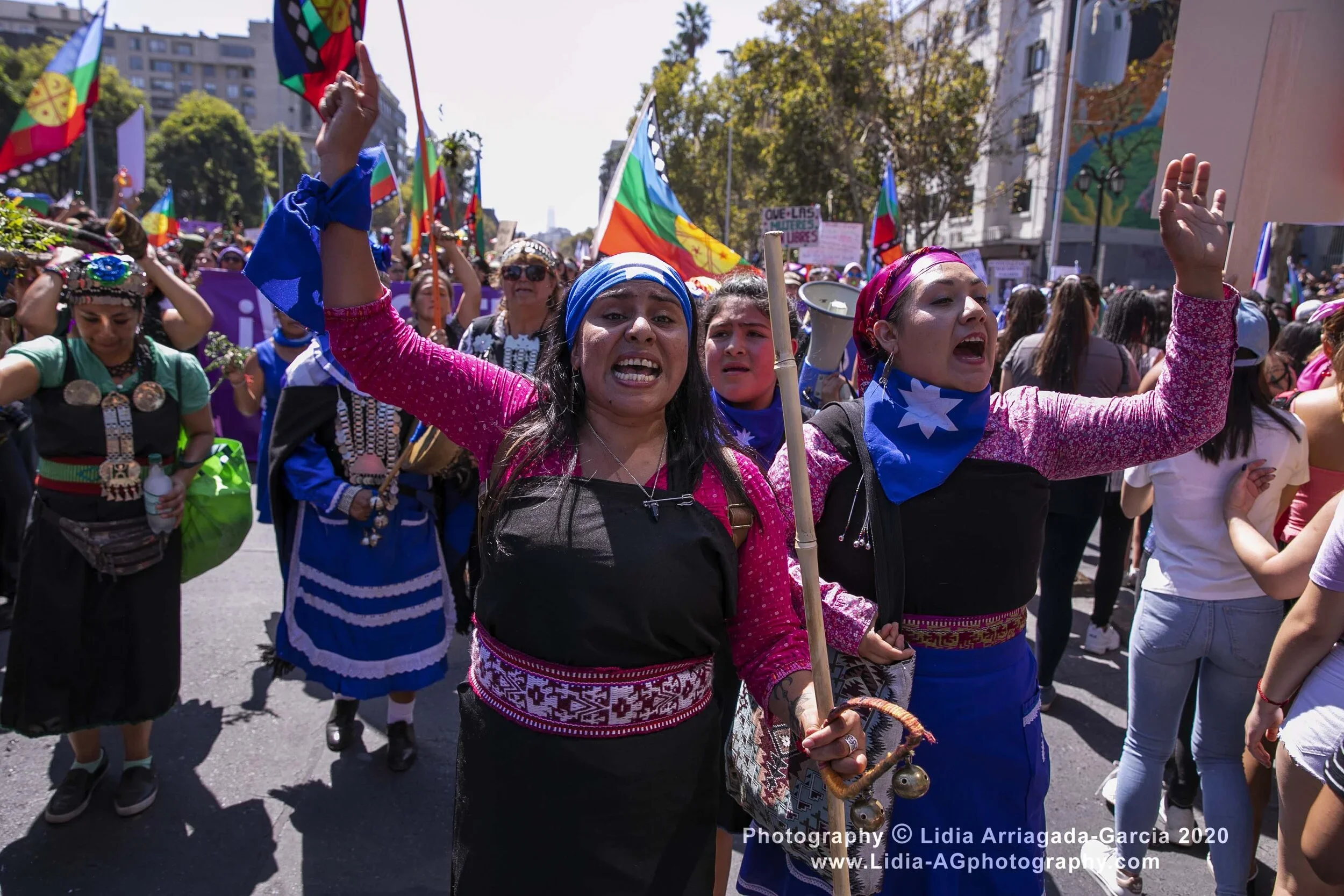
Mapuche women marching and singing, surrounded by Wenufoye flags — Photography © Lidia Arriagada-Garcia 2020
On November 26, 2025, the United Nations General Assembly adopted Resolution A/RES/80/10, proclaiming September 5 of every year as the “International Day of the World’s Indigenous Women and Girls.”
The significance of this historic recognition lies not only in the formal proclamation of September 5, but also in what the General Assembly chose to recognize about Indigenous women and girls.
A/RES/80/10 places their rights, knowledge, participation and dignity at the center of the observance. It recognizes their contributions to biodiversity conservation, environmental protection, climate resilience, maternal health, Indigenous and traditional medicine, the preservation of Indigenous languages and cultures, and the intergenerational transmission of knowledge. It also emphasizes their full, equal and meaningful participation in decision-making and their Free, Prior and Informed Consent when applicable.
At the same time, the resolution recognizes the deeper history behind September 5. Long before its official recognition by the General Assembly, the date was already commemorated in several countries as the International Day of Indigenous Women. September 5 carries particular historical significance as the date on which Bartolina Sisa, an Aymara Indigenous leader and symbol of resistance to colonial oppression, was executed in 1782. Her legacy has come to represent the resistance, leadership and struggles of Indigenous women across generations.
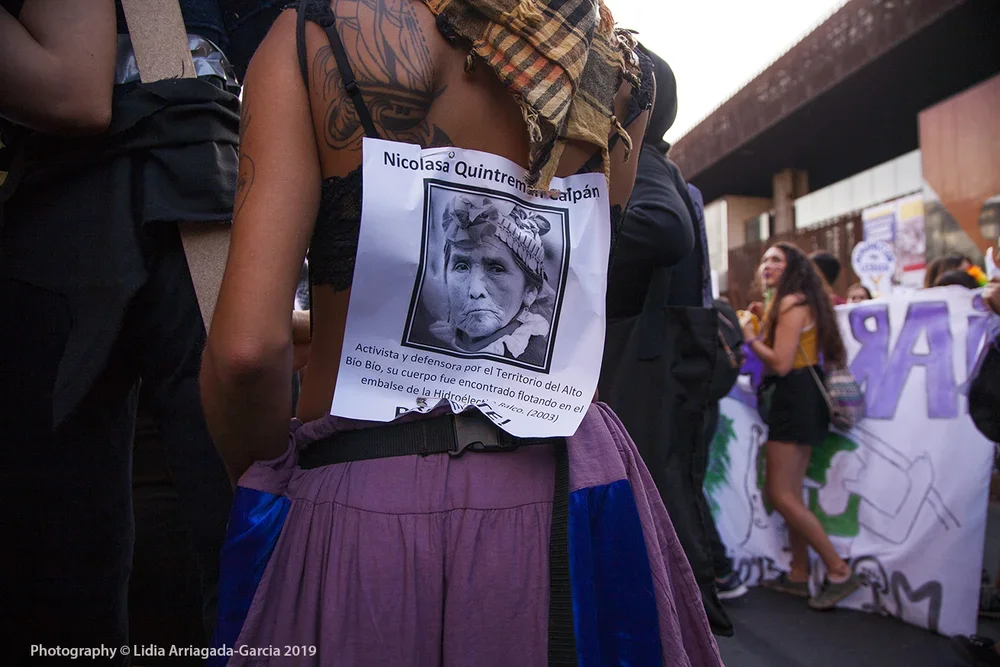
Woman carrying the image of Nicolasa Quintremán — Photography © Lidia Arriagada-Garcia 2019.
The United Nations recognition is new. The struggle, knowledge, leadership and resistance of Indigenous women and girls are not.
In its first operative paragraph, the General Assembly:
“Decides to proclaim 5 September of each year as the International Day of the World’s Indigenous Women and Girls.”
DOCUMENT LINK: A/RES/80/10: Read United Nations General Assembly Resolution A/RES/80/10 — International Day of the World’s Indigenous Women and Girls
Indigenous Women and Girls: Rights Holders, Knowledge Holders and Decision-Makers
One of the most important elements of A/RES/80/10 is its recognition that Indigenous women and girls are not simply populations affected by environmental, social and economic challenges. Their participation, perspectives and knowledge are themselves essential contributions to addressing those challenges.
The General Assembly recognizes:
“that the participation, perspectives and knowledge of Indigenous women and girls contribute significantly to, inter alia, sustainable development, the conservation of biological diversity and natural resources, the protection of the environment, disaster risk reduction, climate resilience, the preservation and revitalization of Indigenous languages and cultures, maternal health, the intergenerational transmission of knowledge, and the promotion of Indigenous and traditional medicine.”
For Images for Inclusion, this recognition has particular significance.
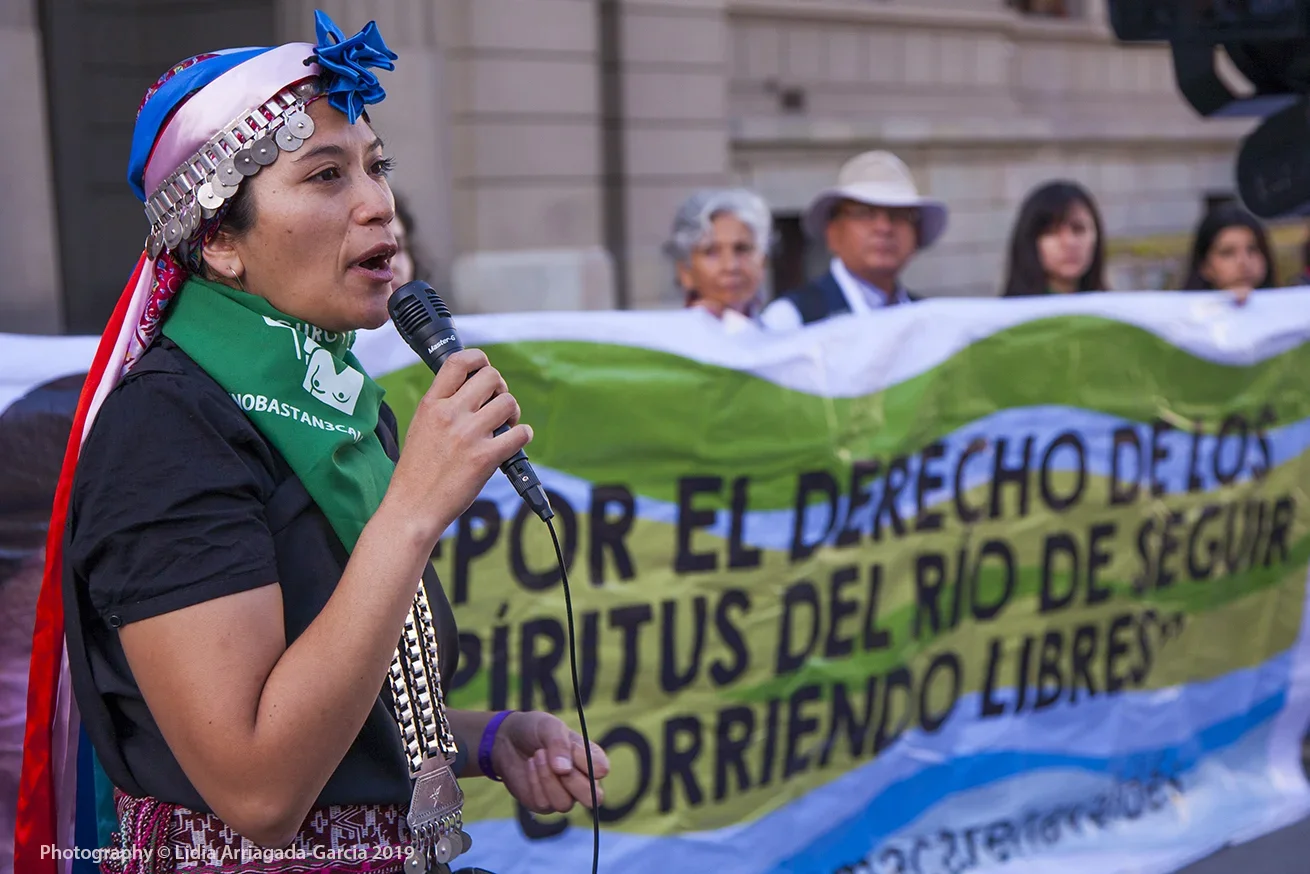
Mapuche woman, Ericka Ñanco, speaking into a microphone, with the rights banner behind her. — Photography © Lidia Arriagada-Garcia 2019
These are not separate issues. Biodiversity, climate, health, Indigenous medicine, language, culture, territory and the transmission of knowledge across generations are deeply interconnected. Those connections have repeatedly emerged through IFI's work with Indigenous Peoples and ancestral authorities and have subsequently informed our advocacy within the United Nations.
A/RES/80/10 goes even further. The resolution expressly notes CEDAW General Recommendation No. 39 (2022) on the rights of Indigenous women and girls, together with General Recommendation No. 40 (2024) on the equal and inclusive representation of women in decision-making systems.
It then emphasizes:
“the need for States to recognize and protect the cultural heritage, scientific and medical knowledge, literary, artistic, musical and dance expression, and natural resources, of all Indigenous Peoples, including Indigenous women and girls.”
And it stresses the importance of the empowerment of Indigenous women and girls and their:
“full, equal and meaningful participation” in decision-making at the local, national, regional and international levels, together with their Free, Prior and Informed Consent when applicable.
For IFI, these principles are not abstract. They closely reflect issues that Indigenous women, ancestral authorities and community members brought forward through our work in ancestral Mapuche territory—and that IFI subsequently carried to the United Nations.
Watch our intervention at the 25th session of the United Nations Permanent Forum on Indigenous Issues (UNPFII25). Item 5 e) Interregional, intergenerational and global dialogue on “Indigenous Peoples and climate change: Articles 3, 4, 25 and 26 of the United Nations Declaration on the Rights of Indigenous Peoples”. April 20, 2026. NEW YORK Headquarters.
From the Territory to the United Nations
These interconnected concerns were brought directly to the United Nations during UNPFII25. On April 20, 2026, Images for Inclusion addressed the impacts of climate change and the impact of the environmental contamination on Indigenous women, including the bioaccumulation of heavy metals in aquatic ecosystems, risks to women’s health, the deterioration of lawen, and the need for disaggregated health data on Indigenous Peoples, with particular attention to Indigenous women.
From Recognition to Implementation
A/RES/80/10 itself calls on Member States, United Nations entities and other relevant stakeholders to observe this Day in order to raise awareness of the need to recognize and respect the rights and fundamental freedoms of all Indigenous women and girls.
Images for Inclusion Inc therefore calls for the effective implementation of CEDAW General Recommendation No. 39, A/RES/80/10 and the United Nations Declaration on the Rights of Indigenous Peoples, including meaningful participation, FPIC, protection of Indigenous scientific and medical knowledge, protection of lands, waters, biodiversity and lawen, and stronger attention to the environmental and health impacts affecting Indigenous women and girls.
Making Violence Visible: The Urgent Need for Disaggregated Data
CEDAW General Recommendation No. 39 recognizes the urgent need for reliable data on violence against Indigenous women and girls. In paragraph 10, the Committee explicitly calls on States to act “without delay”:
“The Committee calls upon States parties to undertake data-collection efforts, without delay, to fully assess the situation of Indigenous women and girls and the forms of discrimination and gender-based violence that they face.”
It further calls for data to be disaggregated by factors including sex, age, Indigenous origin, status or identity, and disability, and emphasizes collaboration with Indigenous women and their organizations.
Importantly, GR39 also states that Indigenous Peoples should have control over data-collection processes in their communities and over how those data are stored, interpreted, used and shared.
The urgency becomes even clearer in paragraph 35, which addresses gender-based violence specifically. The Committee states that violence disproportionately affects Indigenous women and girls and warns:
“Although there is increasing evidence of the magnitude, nature and consequences of gender-based violence globally, knowledge of its incidence against Indigenous women is limited.”
The Committee therefore stresses “the need for States to undertake data-collection initiatives, in collaboration with Indigenous organizations and communities, to understand the scope of the problem of gender-based violence against Indigenous women and girls.”
In Chile, cases such as those of Macarena Valdés and Julia Chuñil highlight the urgent need to make violence against Indigenous women and girls visible. Disaggregated data is not merely a technical matter: without adequate information, the scale and patterns of this violence can remain hidden, hindering effective responses and accountability.
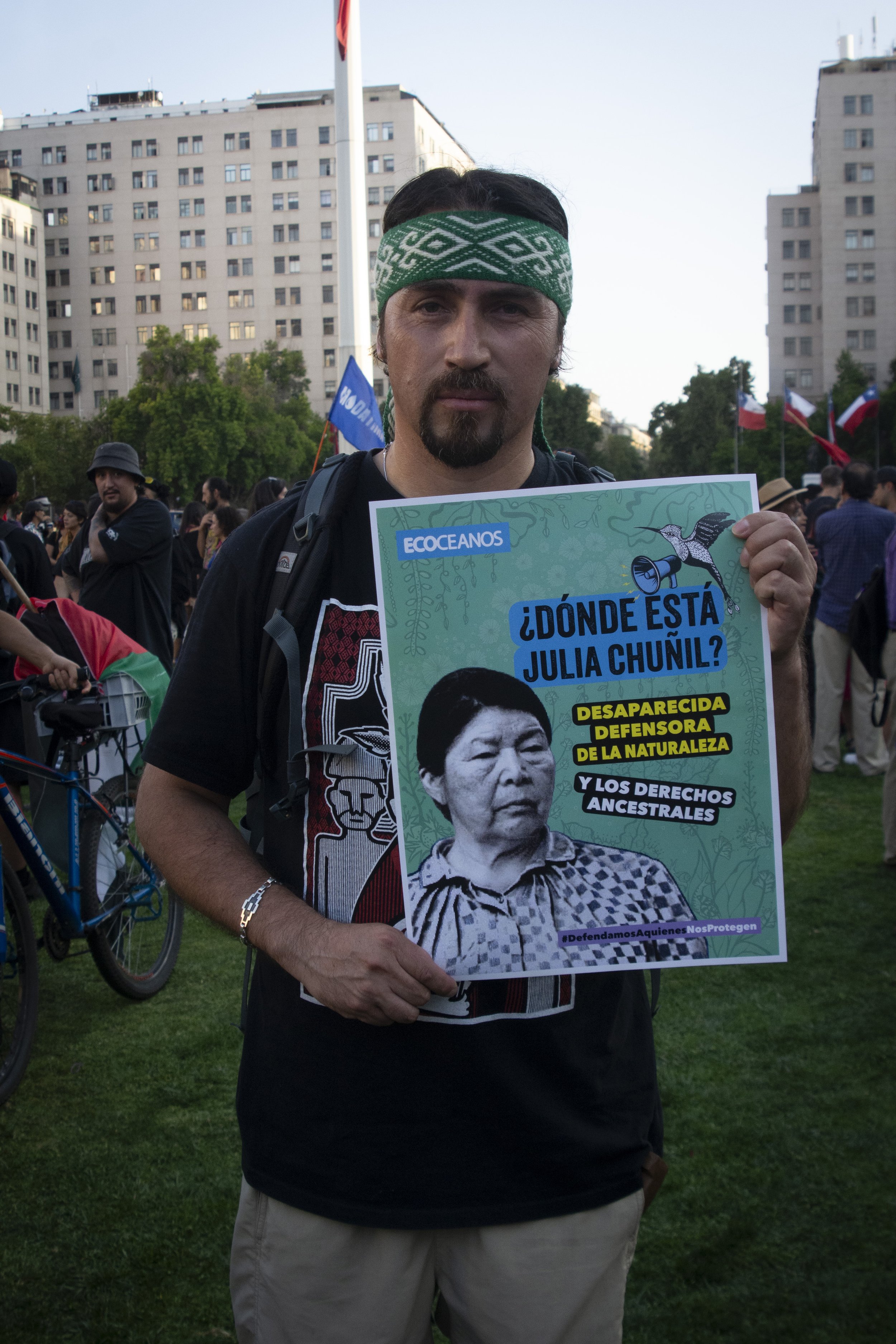
Where is Julia Chuñil?
Jaime Cuyanao / WAIKIL. January 2025. Photography © David Rojas Borquez
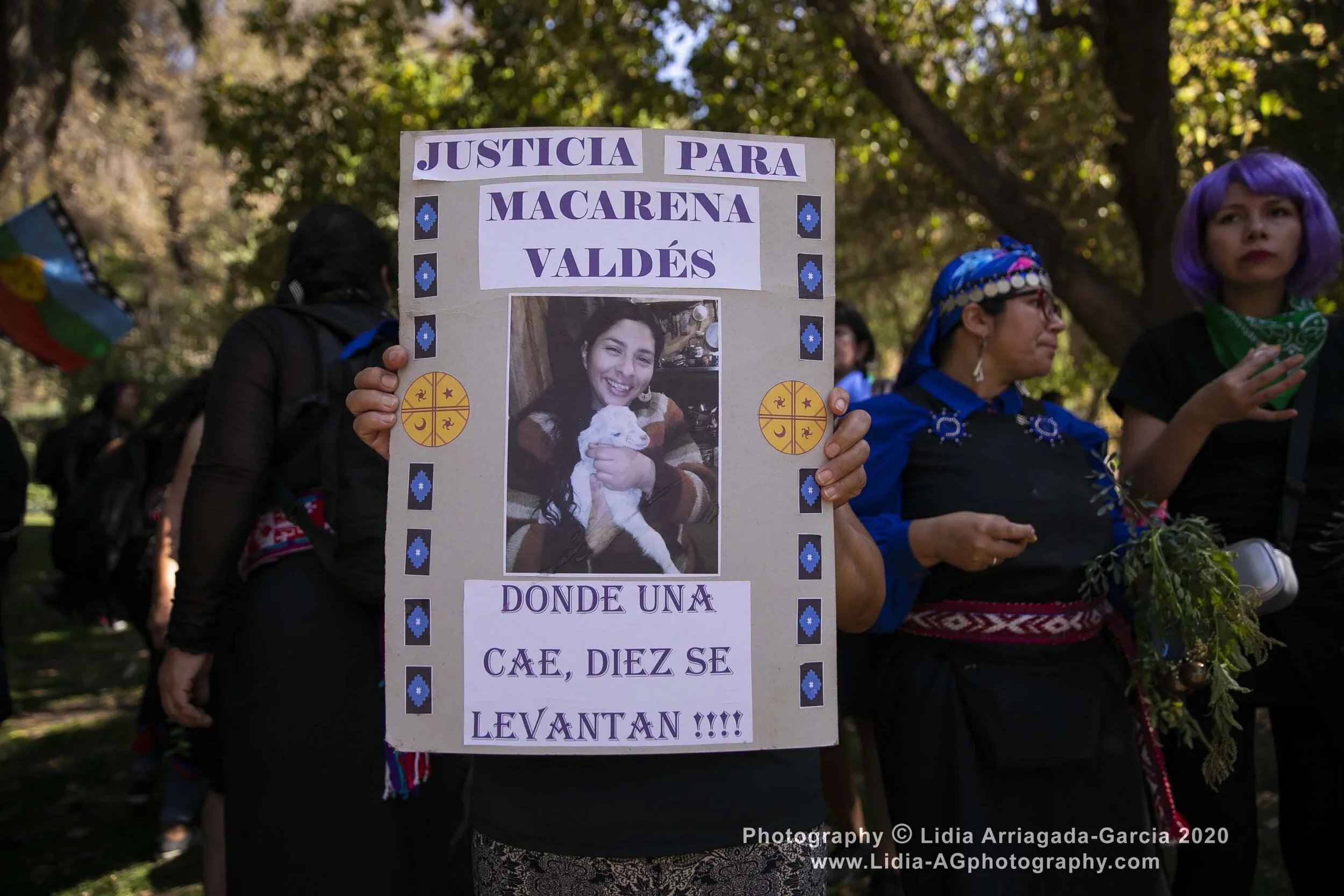
Justicia para Macarena Valdés, Photography © Lidia Arriagada-Garcia 2020