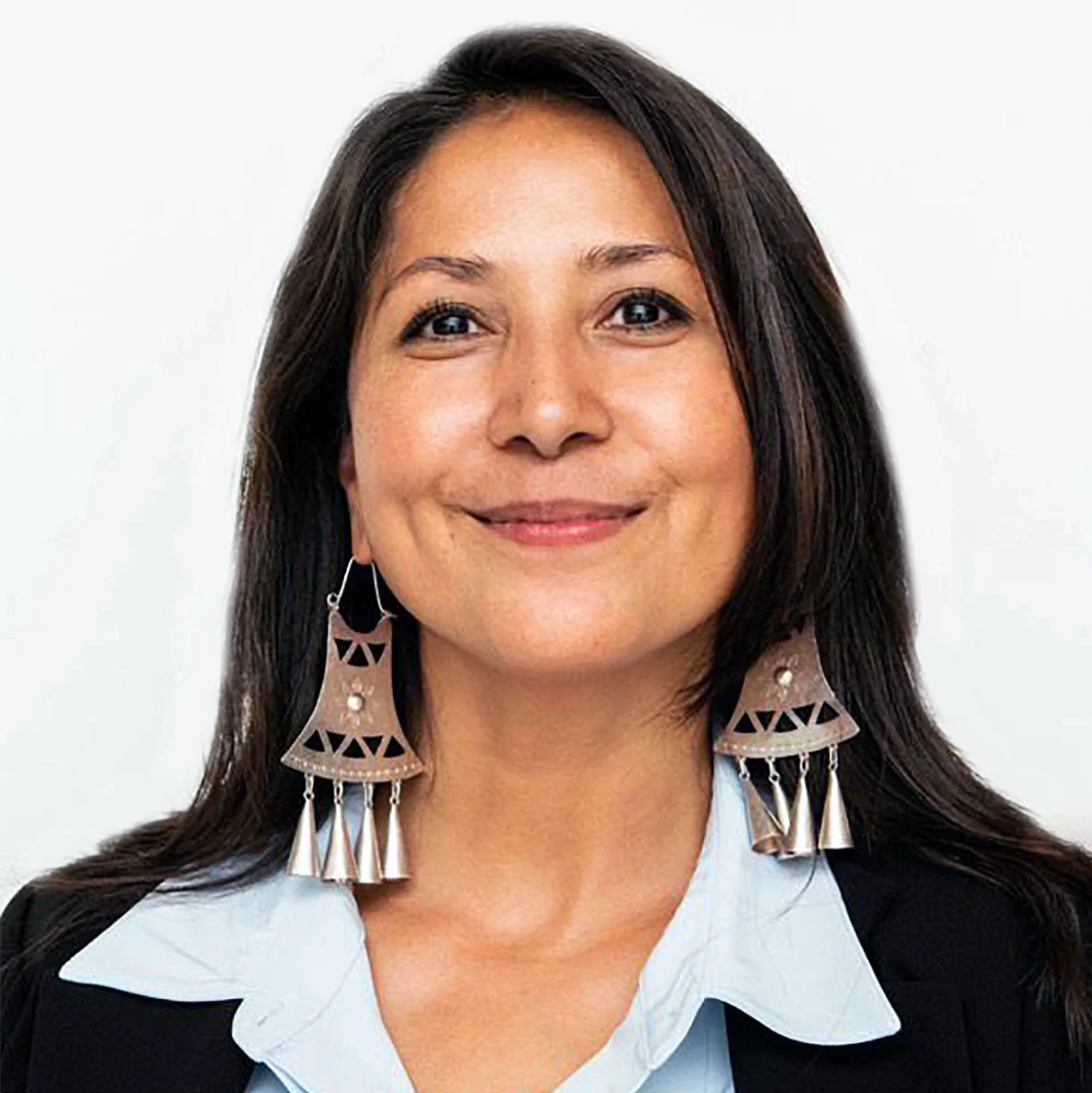
From “An Audience That Matters” to Decision-Makers: Why Indigenous Peoples Must Lead in 2027— For all people, human dignity and peace in the world.
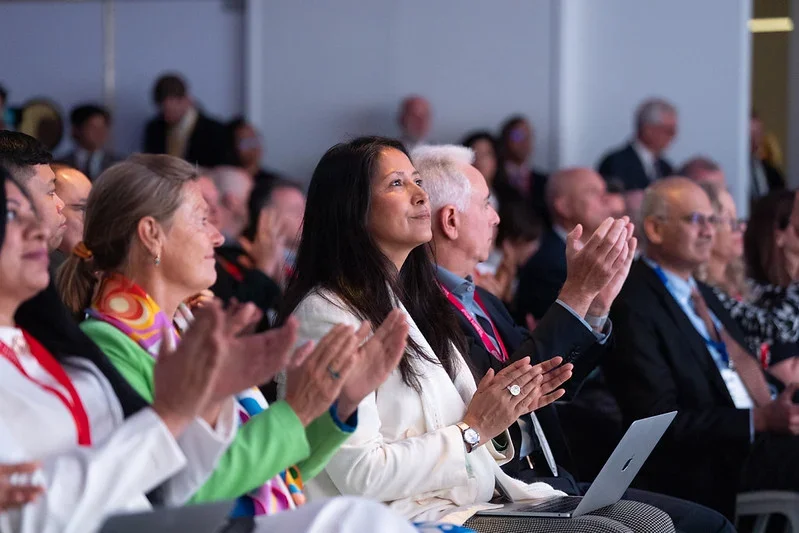
Lidia Arriagada Garcia, President & CEO of Images for Inclusion Inc (IFI), in the audience on Day One (Monday, September 21, 2026) of Climate Group’s The Hub Live during Climate Week NYC 2026 on Lenapehoking (New York City). Photo courtesy of Climate Group / Climate Week NYC 2026.
Images for Inclusion Inc is grateful to Climate Group for extending a complimentary pass that enabled our participation in The Hub Live during Climate Week NYC 2026. Our organization was represented by its Founder, President and CEO, Lidia Arriagada Garcia, who attended as an observer.
Our intention is not to provide an event report, a comprehensive account of The Hub Live, or a summary of its programme and speakers. Rather, this article reflects on selected discussions, interventions and exchanges that particularly caught our attention during the two days—focusing on those in which Indigenous Peoples were mentioned, as well as a key opening address in which they were notably absent. We consider these moments from the perspective of Images for Inclusion's work to advance the rights, recognition and meaningful participation of Indigenous Peoples in decisions impacting their lives, lands, waters and territories. The reflections that follow are therefore selective and do not seek to represent the full range of discussions held at The Hub Live.
On Tuesday, September 22, 2026, the second day of Climate Week NYC 2026, convened by Climate Group on Lenapehoking, the ancestral homeland of the Lenape People, Jaclyn Whittal, meteorologist and veteran storm chaser, and Founder and CEO of One Earth Communications, stepped onto the stage at The Hub Live to moderate Climate Group’s first Artificial Intelligence Forum, where she opened with a prediction that feels especially fitting today: “when we talk about AI, everyone wants to talk about it”, and "you’re going to be (speaking about it) at your Thanksgiving dinner table," and all ages, all generations, all cultures will be talking about this important topic.”
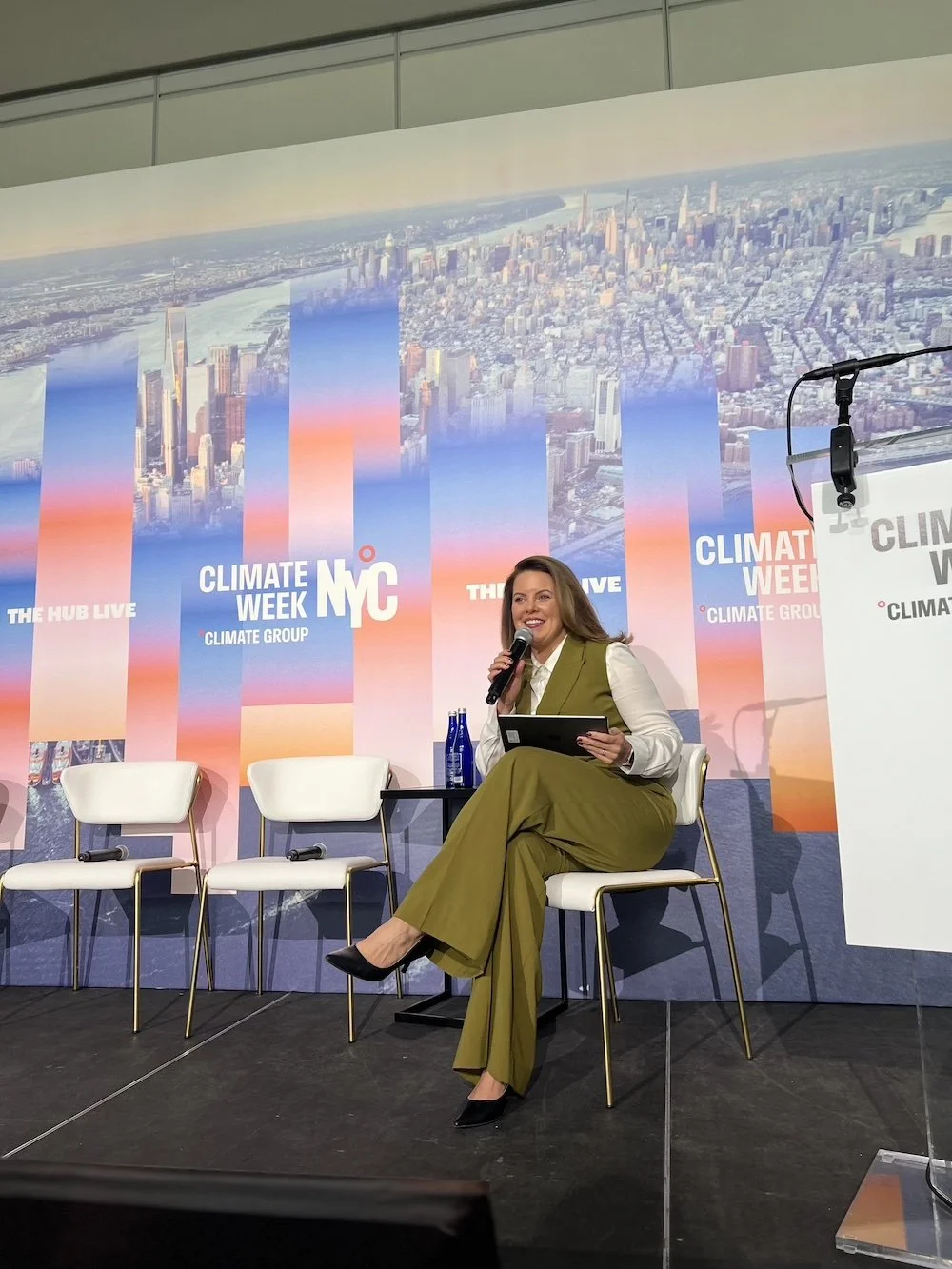
Jaclyn Whittal, meteorologist, former storm chaser, and Founder & CEO of One Earth Communications, moderating Climate Group’s first Artificial Intelligence Forum at The Hub Live during Climate Week NYC 2026 on Tuesday, September 22, 2026. © 2026 Images for Inclusion Inc (IFI)
Candidly noting that AI was not her original background—having spent two decades studying extreme weather patterns before founding her communications firm—Whittal pointed out that artificial intelligence is moving so fast that all of us are learning in real time. She is right. People everywhere are talking about AI—not merely as a shiny new digital tool, but alongside the widening cracks in global governance, heading into and following CBD COP17 in Yerevan (October 2026) and COP31 in Antalya (November 2026), and a persistent lack of consensus among States Parties. As Whittal warned the room:
"AI may be digital, but it is far more physical in nature. When you think about artificial intelligence it has a major impact on planet Earth, right? It impacts our land, our water, our energy, our land… Its growth is really reshaping the natural world, and we need to make sure we make it ethically and sustainably. So, that intersection is what makes this conversation so important."
Thanksgiving, Stolen Lands, and the History That Shapes Today
Thinking about what we actually talk about around the dinner table on Thanksgiving, however, brings up another deeper truth we can no longer ignore.
Just a couple of days ago here in New York City, on the ancestral land of the Lenape, we spoke with John Scott-Richardson—a Native American actor, cultural educator, UN presenter, and board member of Images for Inclusion Inc—who shared honestly how difficult this day is for him to navigate.
For many Indigenous Peoples in Turtle Island or the so-called United States of America, it is not a carefree celebration, but a solemn time of remembrance tied to painful chapters of survival and defense of their homelands. Richardson showed me on his smartphone a brief story about the King Philip’s War (1675–1678), which you too should read. For generations, mainstream stories have erased Indigenous Peoples’ voices, turning a complex reality into a simplified tale of food, sharing, and gratitude.
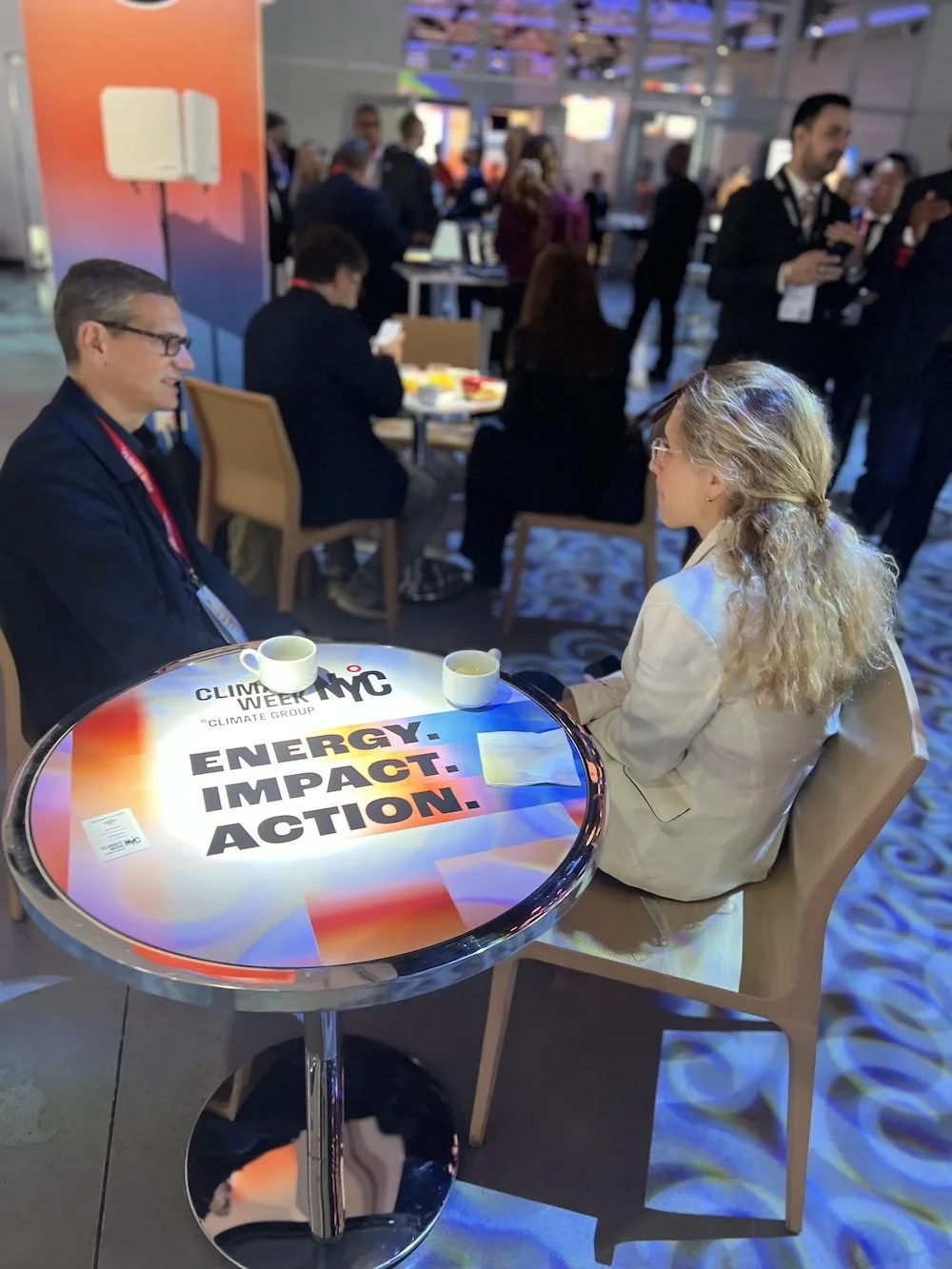
Participants at a table on Day One (Monday, September 21, 2026) of Climate Group’s The Hub Live in New York City. © 2026 Images for Inclusion Inc (IFI).
We can honor the warmth and satisfaction of gathering with family and friends while recognizing why this history must be mainstreamed by—and from the perspective of—Indigenous Peoples themselves, who carry the living memory of their stolen lands and continue to confront the ongoing impacts of food insecurity, water scarcity and its contamination, extractive industries, broken treaties, false promises and ongoing dispossession today.
Such a viewpoint goes beyond setting historical records right; it strikes directly at everything from today’s climate change and biodiversity—all forms of life—to AI and data centers. Every debate over renewables, infrastructure, critical minerals, water scarcity, and related issues returns to the same unresolved questions: Who is coming up with the solutions to climate change, and who gets to implement them? Whose knowledge and sciences hold value? And who decides what happens across Indigenous lands, waters, and territories?
As governments, businesses, and institutions rush toward scaling solutions after CBD COP17 and UNFCCC COP31, we must ask whether humanity is truly moving past taking—or quietly reproducing extraction under banners proclaiming innovation, sustainability, and progress. Seen through that lens, Climate Week NYC 2026 offered a clear test of whether global climate rhetoric matches accountability to Indigenous Peoples’ rights.
This blog aims to offer ways to bring people together and shape a more inclusive Climate Week NYC—with a sharper focus on outcomes and concrete solutions based on ancestral intelligence, from and for Indigenous Peoples and their distinct rights, as the true guardians of about 80% of the planet’s biodiversity.
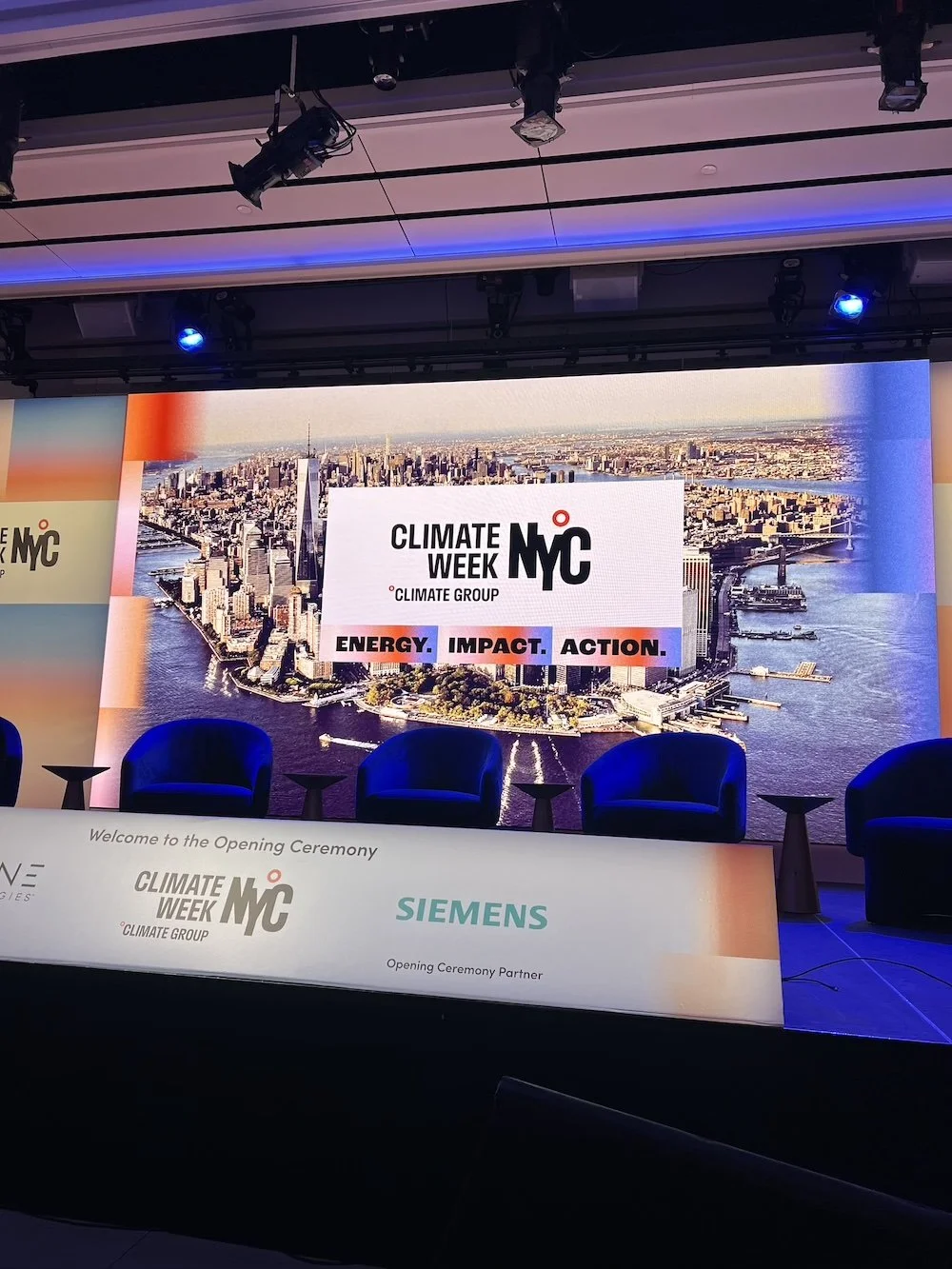
At Climate Week NYC 2026—where Climate Group brought together thousands of participants under the motto "ENERGY. IMPACT. ACTION."—that exact tension played out across two days of high-stakes discussions.
A review of the main stage’s panels and speakers across The Hub Live flagship program revealed both the extraordinary scale of global ambition and a glaring contradiction in what is actually working, what is good and what is not, and who actually holds decision-making power when the future of planet Earth is being negotiated.
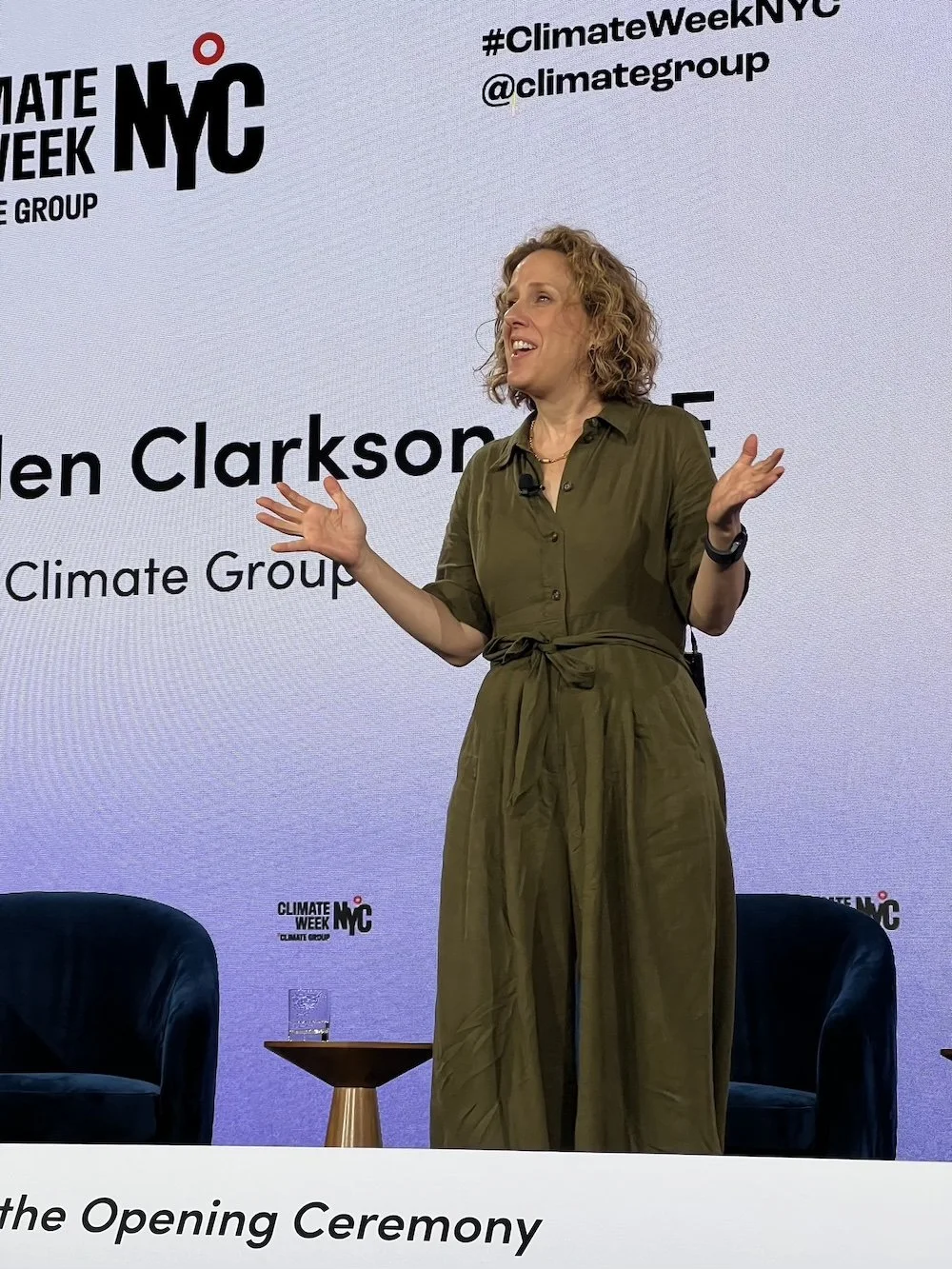
Helen Clarkson OBE, Chief Executive Officer of Climate Group, speaking during the Opening Ceremony on Day One (Monday, September 21, 2026) of Climate Week NYC 2026 at The Hub Live. © 2026 Images for Inclusion Inc (IFI).
The Opening Ceremony: Bold Rhetoric, Missing Voices
Climate Group CEO Helen Clarkson OBE opened Day One with a blunt call to action, encouraging the audience to use their voices instead of trying to please everyone.
"We need new language," she affirmed, warning that "disinformation is big business."
She further expanded on how politicians weaponize people’s fears, stating that we need to change policies, fund science, and face the truth—adding,
"We are making each other quieter and silenced at the exact moment we should get louder."
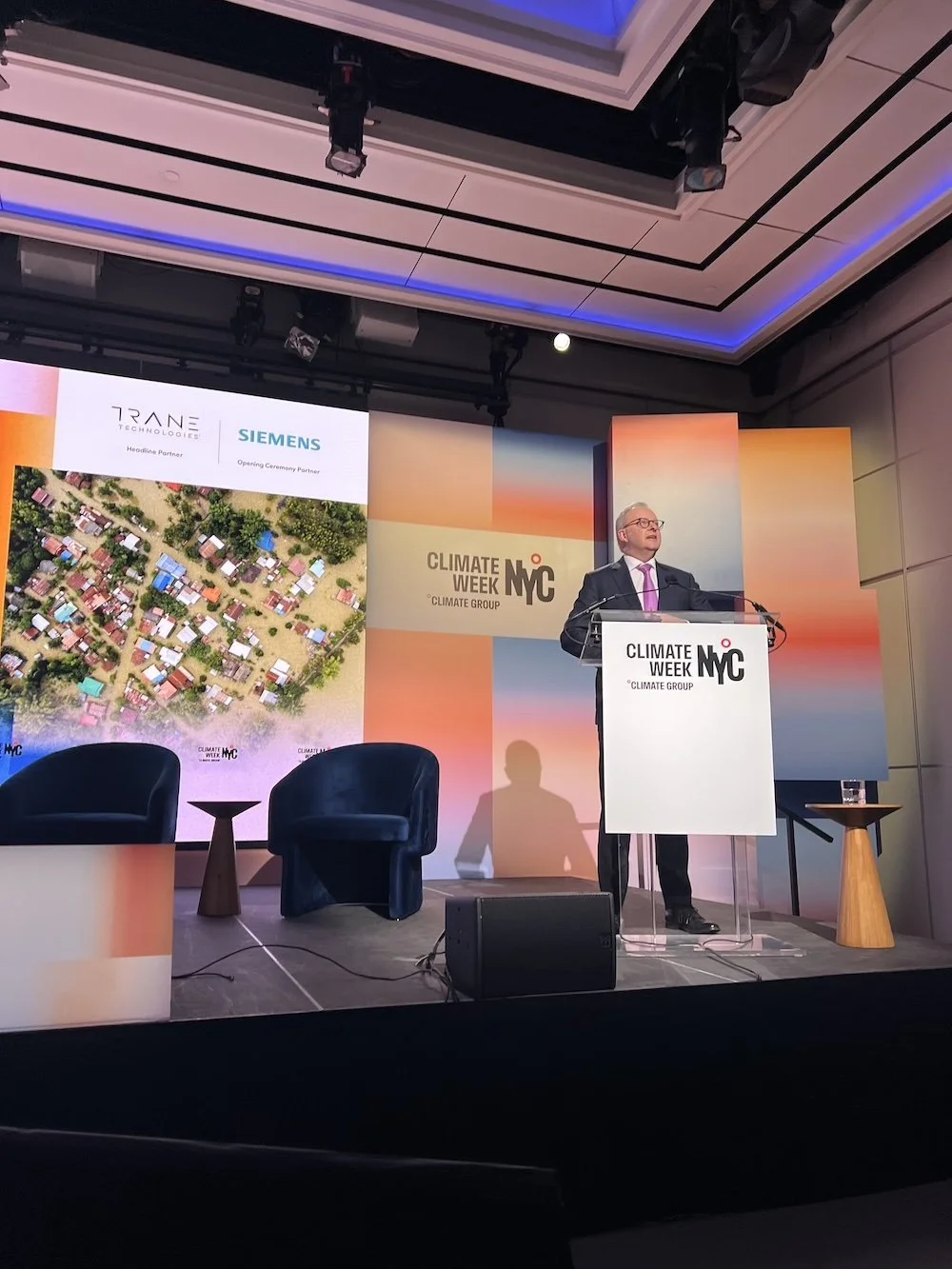
The Hon. Anthony Albanese, MP, Prime Minister of Australia, delivering remarks during the Opening Ceremony on Day One (Monday, September 21, 2026) of Climate Week NYC 2026 at The Hub Live. © 2026 Images for Inclusion Inc (IFI).
Following Clarkson—and acknowledging Climate Group Chair Hon Mike Rann AC CNZM and UK Secretary of State for Energy Security and Net Zero Ed Miliband—Australian Prime Minister Anthony Albanese officially opened Climate Week NYC 2026.
Pointing to record-breaking extreme weather and a looming El Niño threatening Australia and the Pacific, he stated,
“In Australia, spring has arrived. With a record-breaking El Nino forecast, Australia and the Pacific nations are preparing for a potential summer of extreme heat, bushfires and floods.”
Albanese highlighted Australia’s 2035 target to cut emissions by 62 to 70 percent below 2005 levels, noting that renewables have reached half of Australia’s grid at peak summer demand alongside 10,000 home batteries installed every week.
He emphasized expanding critical minerals and rare earth processing, $100 million for the Pacific Resilience Facility, $350 million for Pacific climate-resilient infrastructure, the REnew Pacific Program (improving 300,000 lives), the Falepili Union Treaty with Tuvalu, and Australia’s COP31 partnership with Türkiye and the Pacific.
While he spoke extensively about critical minerals and regional markets, his remarks stopped short of specifying binding safeguards for Indigenous Peoples on the front lines of climate change.
As UN Secretary-General António Guterres has repeatedly emphasized, Indigenous Peoples hold many of the solutions to the climate crisis. Their Indigenous sciences, alongside all other sciences, are essential to addressing the climate emergency.
Yet these same Peoples continue to bear the brunt of extractive industries on their own territories and in the urban areas of major cities, where a large percentage have been forcibly displaced due to historical land and resource dispossession, discrimination, and racism. Globally, a massive share of resource extraction happens directly on Indigenous lands, waters, and territories, leaving Indigenous Peoples—including the youngest generations—to face displacement, the depletion of water from salt flats and aquifers, and severe environmental damage such as extreme heat, temperature shifts, droughts, wildfires, mudslides, and air pollution.
At the same time, plastic contamination in the ocean, toxic aquaculture sludge laden with antibiotics and chemicals from industrial salmon farms, and the poisoning of water and food systems with cobalt, lead, arsenic, mercury, and oil from mining and thermoelectric plants continue to devastate ecosystems. For Indigenous Peoples and fisherfolk who depend on fisheries, declining fish stocks and ocean contamination directly threaten their livelihoods and drive severe food insecurity.
Speaking on Chile during the 25th Session of the UN Permanent Forum on Indigenous Issues (UNPFII) in 2026, under the theme of Indigenous Peoples and climate change, the representative of Images for Inclusion warned that heavy metals from extractive activities in Chile "enter the food chain and directly affect the health of Indigenous women, especially during pregnancy, generating risks of neurological alterations in fetal development, endocrine disorders, and adverse effects on reproductive health." These concerns extend beyond environmental contamination to the deterioration of lawen, Mapuche medicine, threatened by forestry monocultures, recurring devastating fires, and biodiversity loss, as Mapuche machis warn of the consequences for Indigenous healing practices and cultural continuity. What is happening in Chile is not an isolated case—it reflects a wider global pattern wherever critical minerals and now data centers and markets are pursued without binding protections.
Together, these compounding cultural, spiritual, environmental, and health impacts—including heavy-metal contamination, reproductive health risks, alarming rates of cancer, and the deterioration of Mapuche medicine (lawen)—make it clear what was missing from the Prime Minister's remarks: any recognition of Indigenous Peoples, their rights, their knowledge systems, or the consequences they face. These are not peripheral concerns; they are central to whether climate policies can genuinely deliver a just transition.
Addressing this omission represents a clear opportunity for meaningful progress next year—by moving beyond rhetoric to establish binding safeguards, meaningful Indigenous participation, and direct financing that respects Indigenous Peoples' rights to self-determination and a clean, healthy, and sustainable environment.
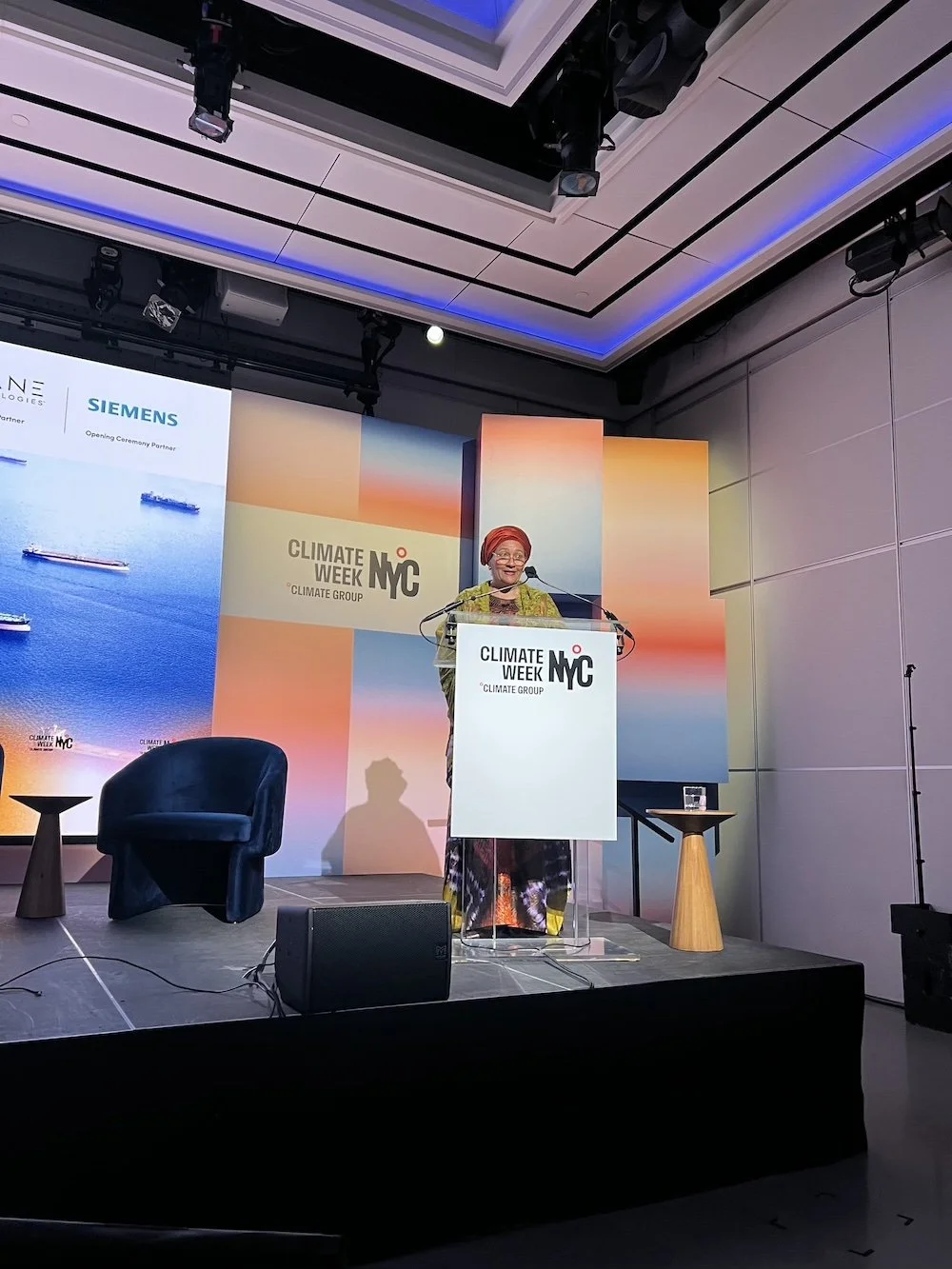
H.E. Amina J. Mohammed, Deputy Secretary-General of the United Nations, during the Opening Ceremony on Day One (Monday, September 21, 2026) of Climate Week NYC 2026 at The Hub Live. © 2026 Images for Inclusion Inc (IFI).
The Unnameable: Indigenous Peoples and the Limits of Multilateralism
In her address, H.E. Amina J. Mohammed, 5th Deputy Secretary-General of the United Nations, never mentioned Indigenous Peoples, not even once—turning them into los innombrables (the unnameable), or the untouchables of climate change, even as she praised discussions in which nations and regions had begun to hear one another.
Looking closely at what grabbed our attention in her remarks makes that omission impossible to ignore. Speaking of conflict zones and global crises, she insisted that:
“we have to come back to the UN, we have to come back to that space where the voices that matter the most are not heard anywhere else,” stressing that real visibility on these issues must happen.
Mohammed stated, “we have to fight for that space,” which raised a fundamental question of governance about who is fighting to be heard in that space if not Indigenous Peoples, those kept invisible and unheard?
Over a century after Haudenosaunee Chief Deskaheh (Levi General) traveled to Geneva in 1923 to seek international recognition of Six Nations sovereignty before the League of Nations, the promise of equal rights and self-determination—enshrined in both the UN Charter and the UN Declaration on the Rights of Indigenous Peoples remains incomplete until Indigenous Peoples hold their rightful seat at the UN General Assembly table as sovereign nations and decision-makers alongside Member States, rather than being relegated to participate as observer delegates for NGOs in consultative status with ECOSOC.
Furthermore, she called on leaders to build a green economy—“blue, turquoise, whatever they are, as long as they are not brown—that is where we want to be.” She also emphasized that “we really need to see an appetite that is growing and really to move away from [coal],” acknowledging that while many developing countries are transitioning toward renewables, “brown is growing too.” To change course sooner rather than later, she urged everyone to “keep the advocacy going,” insisting that the transition “needs to be green, it needs to be scaled, and it needs to be dealt with a sense of urgency.”
Finally, she reminded the room to “keep an eye on multilateralism—that is the international community coming together, the global family that needs to look at our climate and that is our planet. It is about people and human dignity, but it is also about peace for the world, and peace for us to be able to do the job that we set out to do.”
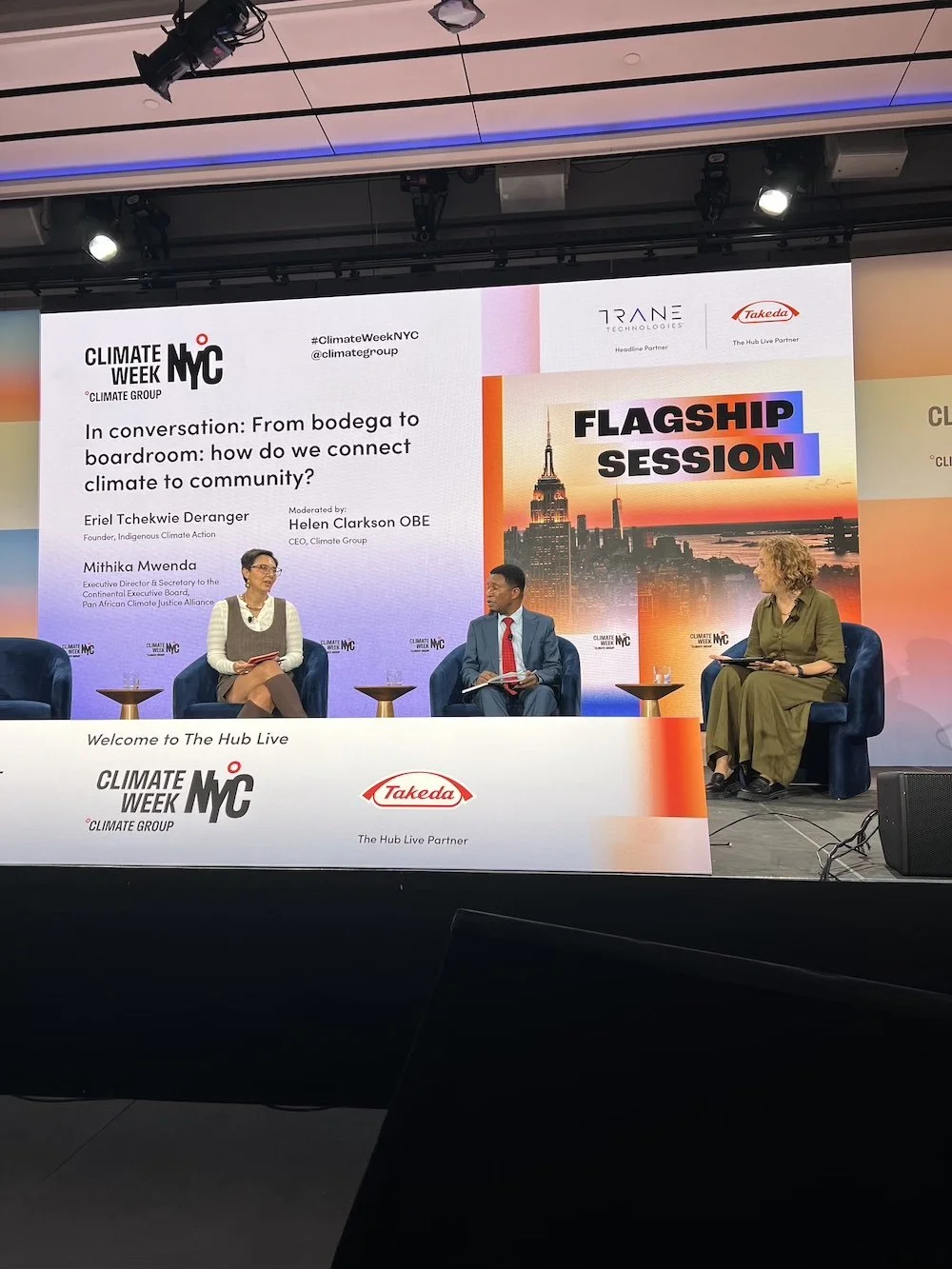
Eriel Tchekwie Deranger (Founder, Indigenous Climate Action), Mithika Mwenda (Executive Director & Secretary to the Continental Executive Board, Pan African Climate Justice Alliance), and moderator Helen Clarkson OBE (CEO, Climate Group). Monday, September 21, 2026, at The Hub Live. © 2026 Images for Inclusion Inc (IFI).
For Images for Inclusion, this is a vision of global family, dignity, and peace that can only be fulfilled when the unnameable are finally named and seated at the table at the UN General Assembly and in a dedicated panel role as the Earth’s true guardians.
Distinct Rights-Holders, Not "Local Communities"
While the opening ceremony showed how easily Indigenous Peoples can go unnamed at high-level tables, other sessions at The Hub Live brought these tensions into sharper focus—most notably “From Bodega to Boardroom: How Do We Connect Climate to Community?”, moderated by Helen Clarkson OBE and featuring Eriel Tchekwie Deranger (a Dënesųłiné woman from the Athabasca Chipewyan First Nation and founder of Indigenous Climate Action) alongside Mithika Mwenda of the Pan African Climate Justice Alliance.
Deranger challenged the assumption that solutions designed in boardrooms—by people who have never visited the territories or witnessed Indigenous Peoples’ interconnectedness with their ecosystems—can meet their needs, stating: “When all voices are present, we can begin to build equitable, just, and successful solutions.” When Clarkson asked, “What is the difference between doing something for the community versus with the community, and why does that distinction matter for a successful transition?”, Deranger replied that “our communities have real contributions to make to this, and we must be part of, co-owners, and co-developers of the solutions,” adding: “Communities do not need to be saved. We have many solutions that simply require the right investments.” She warned that renewable energy development can reproduce extractive models that harm Indigenous Peoples and their lands when their rights and authority are ignored, and called for prioritizing Indigenous values and love for all forms of life over an exclusively anthropocentric approach.
Although we had not met Eriel or known of her work before, we were glad to see her on stage for the first time, appreciated her mention of Indigenous sciences, and congratulated her when the panel ended. We deeply value her work, representation, and efforts to speak out for Indigenous Peoples.
At the same time, the session exposed a deeper structural problem on two levels. First, in its framing: pairing an Indigenous speaker with a community representative under a panel titled “From Bodega to Boardroom: How Do We Connect Climate to Community?”—where in New York City, a bodega is simply a neighborhood convenience store, often open late or 24/7, serving surrounding residents with everyday groceries, snacks, and deli food—and mixing “community-led approaches” with “self-determination” blurred essential legal boundaries. Second, even within an Indigenous intervention, using the conflated phrase “Indigenous and local communities” or referring generically to “our communities” when speaking of ancestral lands and territories merges two fundamentally distinct groups into one category.
Grouping Indigenous Peoples together with local communities is dangerous because it dilutes distinct rights under international law—such as self-determination and Free, Prior and Informed Consent (FPIC)—that do not apply to non-Indigenous groups. Indigenous Peoples are defined by shared ancestral territory, history, culture, language, spirituality, and individual and collective rights—Peoples who existed long before the creation of States—not as general local communities or people living in an urban neighborhood for the time being. Specifically, Indigenous Peoples hold the inherent right to be consulted in good faith, in particular, through their own representative institutions to obtain their FPIC before decisions, action plans, legislative measures, or projects affecting their lands, waters, territories, and resources are adopted or implemented, as recognized in Articles 3, 4, 5, 18, 19, 26, and 32 of the United Nations Declaration on the Rights of Indigenous Peoples (UNDRIP).
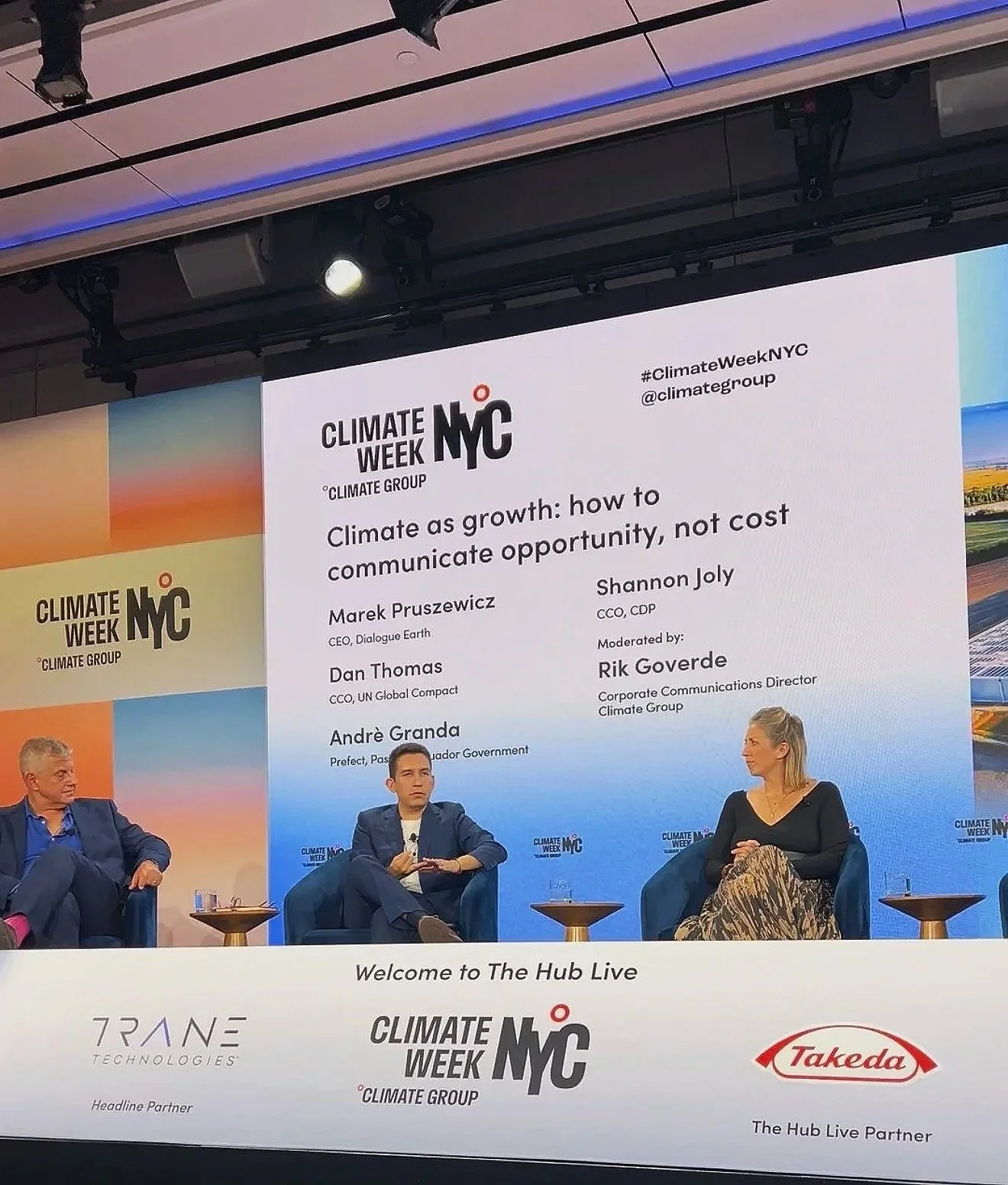
Participants networking in the lounge area at The Hub Live during Climate Week NYC 2026 in New York City. © 2026 Images for Inclusion Inc (IFI).
Rights-Holders, Not a Shortcut: Indigenous Peoples, FPIC, and Climate Policy
That exact tension resurfaced on the main stage during "Climate as growth: how to communicate opportunity, not cost." While corporate communicators debated how to reframe climate change as a market opportunity, André Granda (Prefect of Pastaza, Ecuador) reminded the room what the Amazon actually experiences.
For generations, he explained, the state and global markets have viewed the rainforest merely as an extractive warehouse for oil, mining, and timber. Demanding free, prior, and informed consent and tangible results on the ground, Granda insisted that governments and climate leaders must learn from Indigenous Peoples rather than impose on them.
Lidia Arriagada Garcia approached the Prefect of Pastaza at the end of the panel to make a suggestion: to be clear when he refers to Indigenous Peoples, and when he refers to local communities, as at times, in his remarks the distinctions were confusing.
What this all tells us is that we need a panel dedicated to Indigenous Peoples, asserting their distinct rights, contributions, solutions, and perspectives—not as communities or local communities, not mixed with local communities where their distinct identities are blurred and erased, and not as stakeholders, but as rights-holders.
For Images for Inclusion, this effort is essential. Depending on the applicable legal framework and the rights affected, authorities may design policies for local communities without triggering the specific collective-rights obligations that apply to Indigenous Peoples. Governments, however, cannot treat Indigenous Peoples as interchangeable with local communities or unilaterally determine measures affecting their lands, waters, territories and resources while disregarding their distinct rights and self-determination.
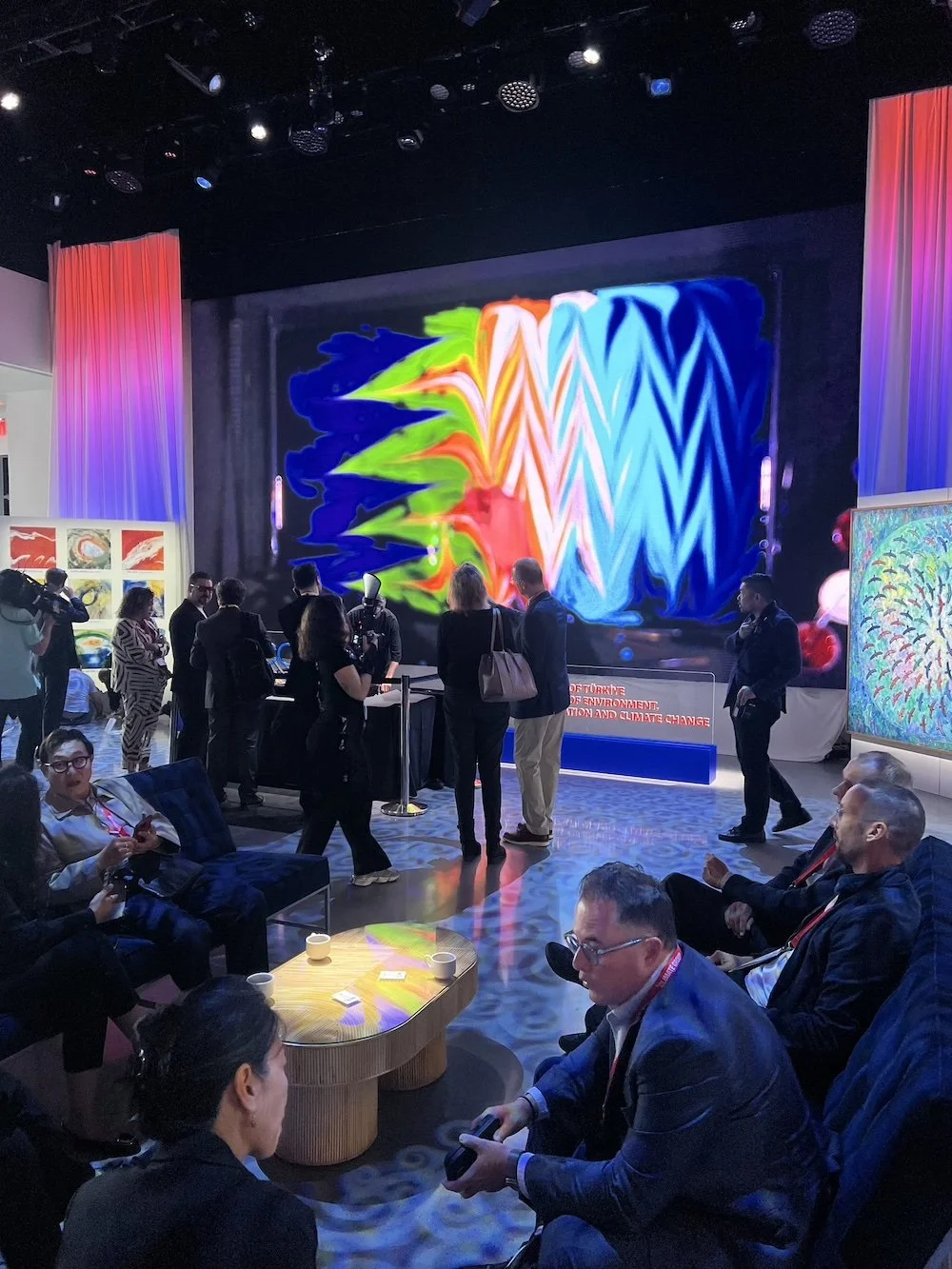
André Granda (Prefect of Pastaza, Ecuador Government) speaking alongside Marek Pruszewicz (CEO, Dialogue Earth) and Shannon Joly (CCO, CDP) during the session “Climate as growth: how to communicate opportunity, not cost” on Day Two (Tuesday, September 22, 2026) of Climate Week NYC 2026 at The Hub Live. © 2026 Images for Inclusion Inc (IFI).
Conflating these groups is not a harmless administrative shortcut. It risks facilitating green colonialism, dispossession and extractive projects—whether driven by continued fossil-fuel extraction, including coal, oil and natural gas, or promoted under the banner of climate action for financial gain and political power. Such practices threaten all living beings on planet Earth. Protecting Indigenous Peoples’ rights also means protecting the lands, waters and territories they have stewarded since time immemorial—ecosystems that sustain the planet's health.
Laws enacted without proper legal distinction can also impose restrictions that directly harm the reproductive health, well-being and dignity of Indigenous women and girls.
Respecting Indigenous Peoples’ right to self-determination means recognizing their authority to define, lead and implement their own climate solutions. A truly just transition cannot be achieved by conflating distinct Peoples, rights and legal obligations, or by perpetuating non-compliance with human rights obligations.
Data Centers, Water Scarcity, and FPIC in the AI Forum
Returning to Climate Group’s first AI Forum—introduced by Mike Peirce (Executive Director of Systems Change at Climate Group), who asked “at what cost to people and to the planet?”, and moderated by Jaclyn Whittal, who guided the discussion with warmth, courtesy, and professionalism while thoughtfully raising critical questions about AI’s physical footprint on land, water, energy, and fossil-fuel reliance—speakers from government, energy, and tech examined data center electricity demand, liquid cooling, and water scarcity in places like Phoenix, the city with the largest number of data centers in the United States, where temperatures regularly reach 110°F.
Moreover, even inside the AI Forum, Robert Bartrop (AirTrunk) acknowledged the Navajo Nation and the necessity of early, community-led engagement around water sources and local sensitivity—proof that infrastructure developers know Free, Prior and Informed Consent (FPIC) is foundational and not negotiable.
A Proposal for Climate Week NYC 2027
With gratitude for Climate Group’s platform and the Indigenous leaders who spoke in 2026, Images for Inclusion Inc proposes a dedicated, full-length panel defined and led by Indigenous Peoples in 2027, alongside stronger Indigenous representation across AI, energy, and finance.
We also encourage a transparent participation pathway—including complimentary tickets and travel support.
On this National Day of Mourning—starting here on Lenapehoking—telling the truth means confronting dispossession and honoring Indigenous Peoples’ sovereignty.
An ethical AI future and just climate transition require full respect for Indigenous Peoples’ rights. In 2027, Indigenous Peoples must not merely sit in the seats as “an audience that matters,” but lead on stage as rights-holders, co-architects, and decision-makers—with the authority to shape decisions affecting their territories, lands, and waters for the current and next seven generations.
Those water and territory questions at the AI Forum point directly to what must change next—not only in how new infrastructure is built, but in who holds authority when climate and technology agendas are set.
Final remarks
As the three United Nations Indigenous Peoples-specialized mechanisms—Former Special Rapporteur on the Rights of Indigenous Peoples, José Francisco Calí Tzay, EMRIP Chairperson Sheryl Lightfoot, and UNPFII Chairperson Dario José Mejía Montalvo—affirmed in their July 2023 Joint Statement commemorating the centenary of Chief Deskaheh’s mission to Geneva, the characteristics, nature, and origins of Indigenous Peoples’ rights are fundamentally distinct from those of non-Indigenous groups, urging all UN entities and climate and biodiversity treaty processes to cease conflating, combining, or equating Indigenous Peoples with "local communities." Maintaining that boundary—both in how panels are framed and in the language used by speakers—is essential so that Indigenous Peoples’ collective rights are never diluted into generic categories that undermine their rights.